
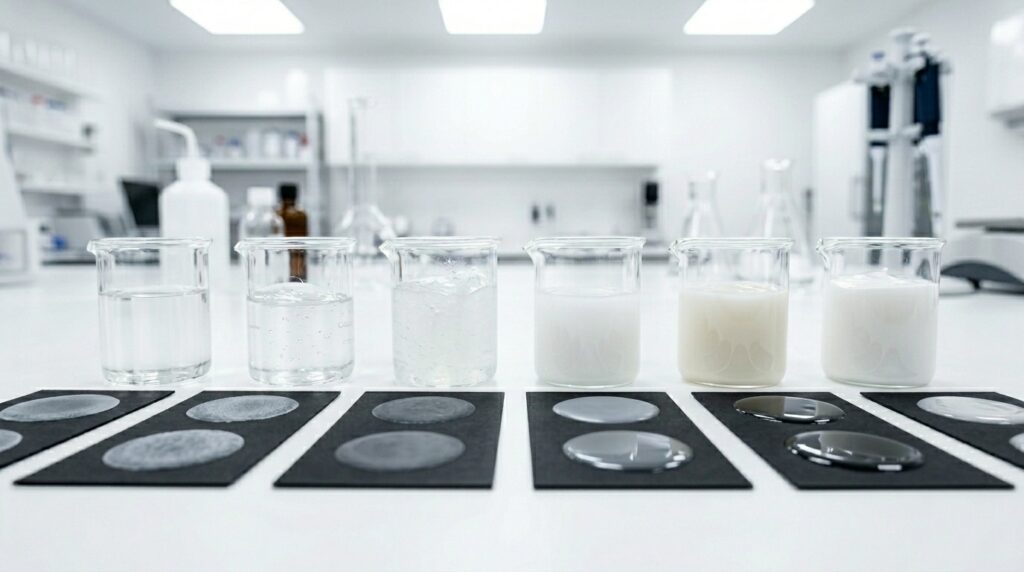
Film formers are among the most functionally consequential ingredient classes in cosmetic formulation. Whether you’re developing a humidity-resistant hair styling product, a long-wear foundation, or a water-resistant sunscreen, your choice of film forming ingredients will directly determine wear performance, sensory profile, and, increasingly, regulatory compliance.
Understanding the full range of cosmetic film formers matters more than ever. The global film formers market is projected to reach USD 2.67 billion by 2032 at a 5.2% CAGR, driven by demand for longer-lasting, water-resistant formulations. At the same time, emerging regulations targeting synthetic microplastics are pushing brands and formulators to audit their film former selections and explore bio-based alternatives.
Key Takeaways
- Film formers create a continuous, flexible coating on skin, hair, or nails after carrier solvent evaporation, providing long wear, water resistance, texture modification, and active ingredient fixation.
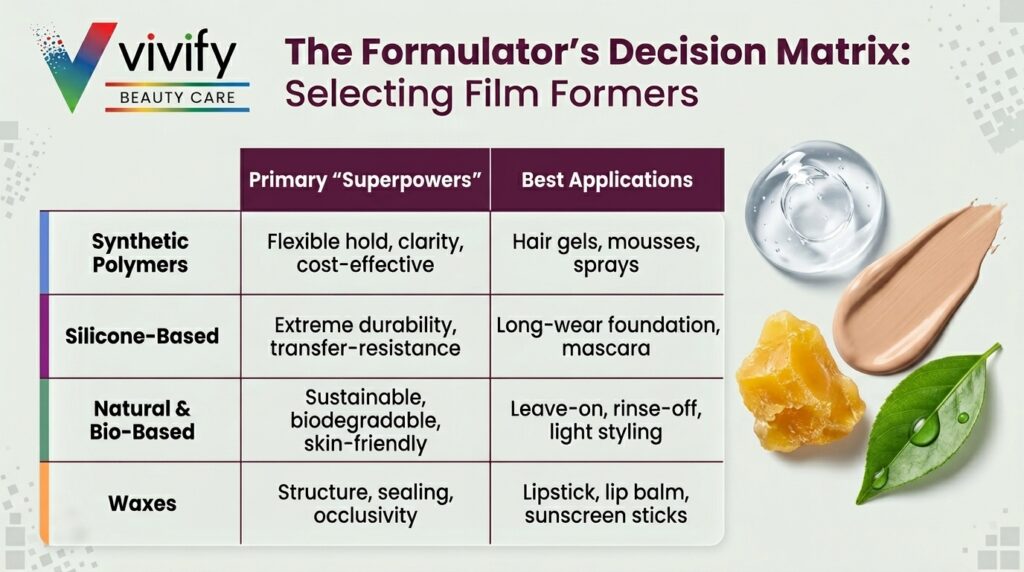
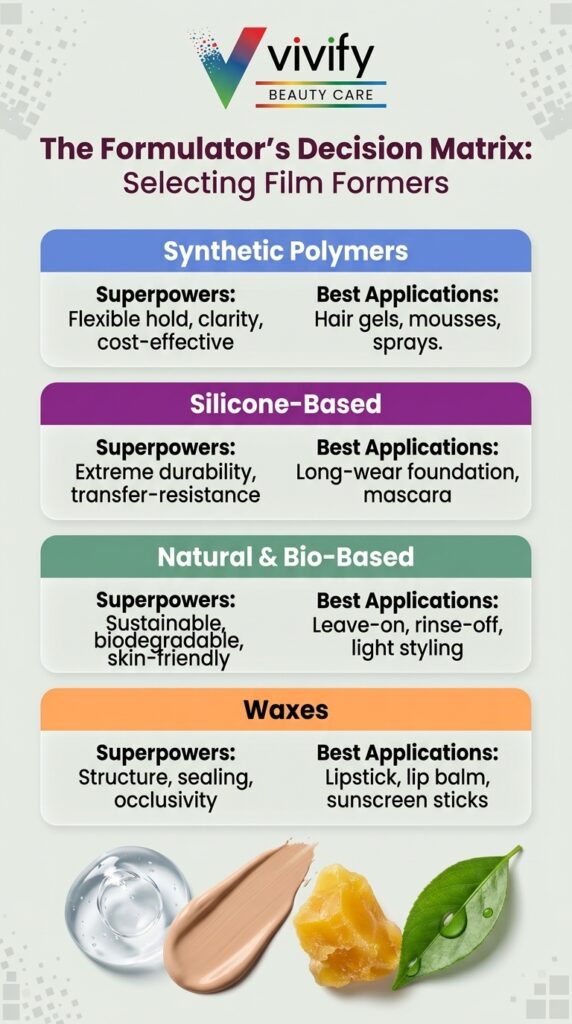
- The four major classes are: synthetic polymers (PVP, VP/VA copolymer, acrylates copolymer), silicone-based film formers (trimethylsiloxysilicate and related silicone resins), natural and bio-based alternatives (shellac, cellulose derivatives, chitosan, pea-based polymers), and waxes (carnauba, candelilla, beeswax).
- Solubility class (water-soluble vs. oil-soluble) is one of the most critical selection parameters: water-soluble film formers suit water-based and rinse-off systems, while oil-soluble options deliver stronger wear resistance and transfer resistance in anhydrous or emulsion systems.
- Synthetic film formers hold more than three-fifths of global market share, but demand for bio-based alternatives is rising as EU Regulation 2023/2055 (the microplastics restriction) applies to certain synthetic polymer film formers in leave-on products.
- Application drives selection: hair care prioritizes hold level, humidity resistance, and flexibility; skin care prioritizes breathability, feel, and UV-filter compatibility; color cosmetics prioritizes transfer resistance, pigment lock, and film flexibility to prevent flaking.
- Vivify’s portfolio of film formers and fixatives includes synthetic polymers, silicone-based systems, and hybrid options for skin, hair, and color cosmetic applications.
What Are Film Formers in Cosmetics?
Film formers are ingredients that, once applied to a surface and as the carrier solvent evaporates, deposit a continuous, coherent film that adheres to the substrate. The substrate may be skin, hair, nails, or lips. The resulting film can provide mechanical structure, barrier function, aesthetic performance, or a combination of all three.
Their functional roles vary by product category. In hair styling, film formers provide hold and frizz resistance by coating the hair shaft. In color cosmetics, they lock pigment, extend wear, and improve transfer resistance. In skin care and sunscreen formulations, they help retain UV filters under humidity and perspiration and can fix actives at the skin surface.
The breadth of use is significant. Film forming ingredients appear in over 1,100 hair care products, nearly 1,000 skin care products, and more than 750 decorative cosmetics in SpecialChem’s formulation database. Selecting the right film former for a given formulation requires understanding material class, solubility, film properties (flexibility, clarity, water resistance), and compatibility with the rest of the formula.
Types of Film Formers Used in Cosmetics
The major film former classes differ in chemical origin, solubility, film properties, and regulatory status. Here is an overview of each.
Synthetic Polymers
Synthetic polymers are the most widely used class of film forming ingredients, accounting for more than three-fifths of global market share. Common examples include:
- Polyvinylpyrrolidone (PVP, INCI: PVP): water-soluble, forms a clear, flexible, light-hold film. Widely used in hair styling sprays, gels, and serums. AccessFIX K90/L20 is a PVP-based film former that provides a thin, invisible coating that locks style without stiffness.
- VP/VA Copolymer (INCI: VP/VA Copolymer): water-soluble and alcohol-soluble, delivers stronger hold than PVP with improved humidity resistance. Well suited for leave-in styling products and long-hold applications. AccessFIX PNI73 is a VP/VA copolymer offering adjustable hold, frizz control, and humidity resistance.
- Acrylates Copolymer: available as water-based emulsions or alcohol-soluble grades. Used in waterproof mascara, sunscreen, and long-wear color cosmetics. Provides good film flexibility and water resistance once dry.
Silicone Film Formers
Silicone-based film formers, particularly trimethylsiloxysilicate (MQ resin, INCI: Trimethylsiloxysilicate), are oil-soluble and deliver some of the highest levels of transfer resistance and water resistance available to formulators. They are widely used in long-wear and waterproof formulations for skin and lips.
Key performance properties include:
- Excellent durability against water, sweat, and sebum
- Smooth, dry-touch or waxy sensory profile depending on grade
- Good compatibility with silicone carrier systems (cyclopentasiloxane, phenyl trimethicone)
- Film flexibility that reduces the risk of cracking or flaking during wear
AccessSIL FF-16 is a silicone film former designed for long-lasting, water-resistant formulations. AccessSIL FF-2001 is a silicone resin offering a durable, flexible film suitable for skin, lips, and hair applications.
Natural and Bio-Based Film Formers
Natural and bio-based film formers include shellac (INCI: Shellac), cellulose derivatives (hydroxyethyl cellulose, hydroxypropyl methylcellulose), chitosan, starch-based polymers, and emerging pea-based polymers. Properties vary considerably by source and processing:
- Shellac provides a hard, glossy film used in nail polish, lip products, and mascara formulations.
- Cellulose derivatives form soft, flexible, water-soluble films suited to rinse-off applications and light-hold styling products.
- Chitosan (derived from crustacean shells or fungal sources) forms cationic films with natural affinity for hair, providing light conditioning alongside hold.
- Pea-based and other plant-derived polymers are gaining traction as biodegradable alternatives to synthetic acrylates and PVP in leave-on applications.
Natural film formers typically offer softer hold and more limited water resistance than synthetic equivalents. For formulators evaluating reformulation pathways due to regulatory changes, these options represent credible starting points for leave-on and light-hold applications.
Waxes as Film-Forming Agents
Hard waxes, including carnauba wax, candelilla wax, and beeswax, form films through crystallization as the carrier cools or evaporates. They function as film formers in anhydrous systems such as mascara, lipstick, and sunscreen sticks. Wax selection parameters include melting point, hardness, compatibility with emollient components, and the product structure the formulation requires.
Water-Soluble vs. Oil-Soluble Film Formers: A Key Formulation Decision
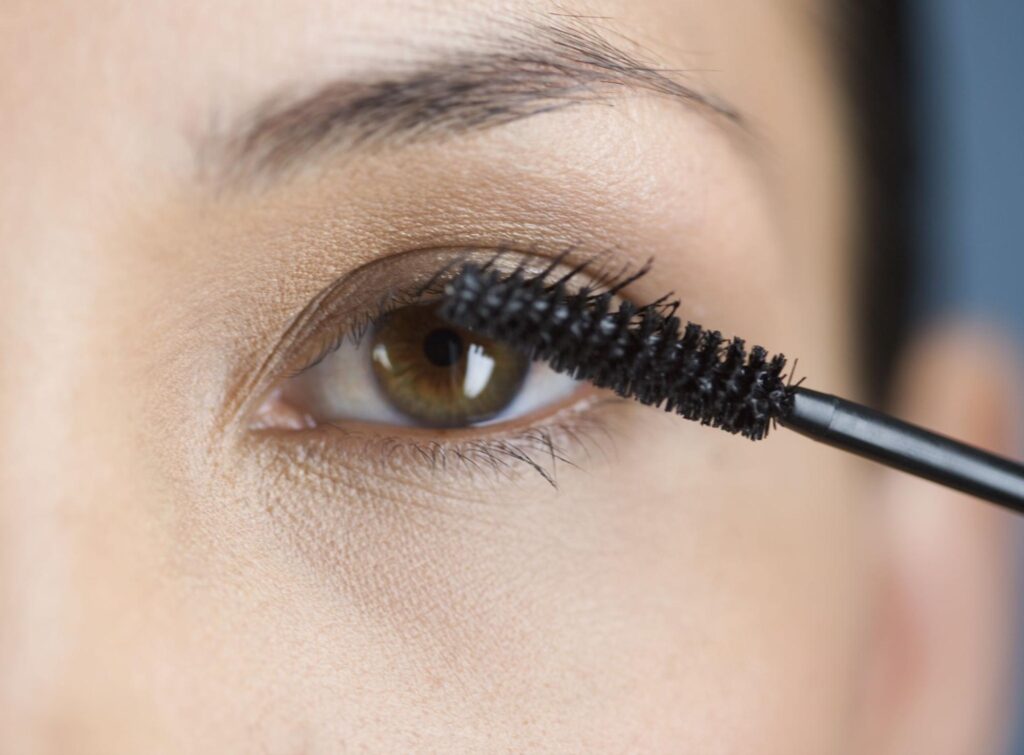
Solubility class is one of the most important selection criteria when choosing a film former. The two groups behave differently during processing, in the final formula, and on the skin or hair surface.
| Property | Water-Soluble Film Formers | Oil-Soluble Film Formers |
| Common examples | PVP, PVA, Acrylates Copolymer emulsions | Trimethylsiloxysilicate, PVP/hexadecene copolymer |
| Phase compatibility | Water phase, O/W emulsions | Anhydrous systems, W/O emulsions, silicone phases |
| Water resistance | Moderate; can reactivate in high humidity | High; resistant to water, sweat, and sebum |
| Rinse-off | Removes easily with water | Typically requires oil-based cleanser or micellar technology |
| Typical applications | Hair styling gels and sprays, water-based serums, gel foundations | Long-wear foundations, waterproof mascara, transfer-resistant lip products |
| Regulatory note | Some grades subject to EU microplastics restrictions in leave-on products | Most grades currently outside microplastics scope; PFAS overlap for certain types |
This distinction also affects performance under stress conditions during wear. Water-soluble film formers in leave-on products can soften or reactivate in high-humidity conditions or with perspiration, which matters significantly for waterproof or sport claims. Oil-soluble options, particularly silicone resins, remain stable under these conditions but require an oil phase or silicone carrier for proper incorporation.
For a related discussion on how functional ingredients interact with the emulsion system, see Choosing the Right Emulsifier System.
Selecting Film Formers by Application Category
Application type is the primary driver of film former selection. Performance expectations, wear conditions, and consumer experience requirements differ substantially across skin care, hair care, and color cosmetics.
Skin Care Applications
In skin care formulations, film formers serve protective, sensory, and performance-fixation roles. Sunscreen is the most technically demanding application: the film former must keep UV filters evenly distributed and intact across the skin surface during perspiration, sebum exposure, and mechanical stress. This requires strong adhesion, flexibility, and water resistance without the tacky or greasy feel that high-use-level polymers can produce.
Key selection criteria for skin film former applications include:
- Film flexibility to accommodate facial movement without cracking
- Breathability and non-occlusive character for extended wear
- Compatibility with UV filters, actives, and the emulsifier system
- Acceptable sensory profile at effective use levels, avoiding tacky, stiff, or pilling feel
Hair Care Applications
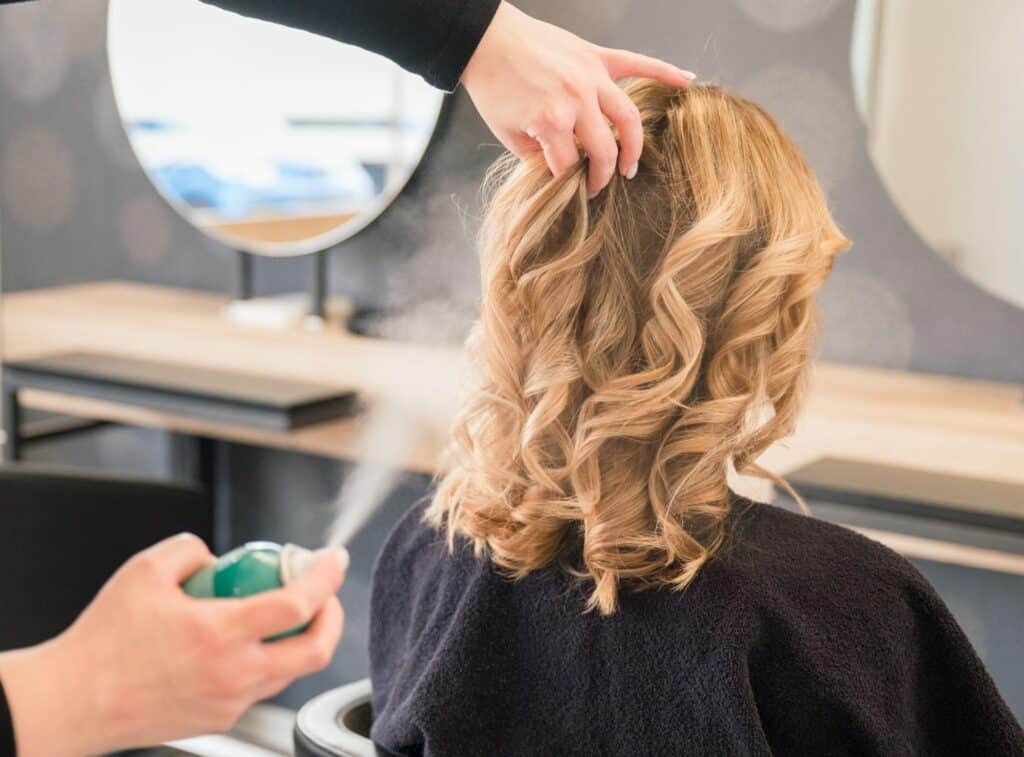
Hair film formers must balance hold strength, flexibility, humidity resistance, and ease of removal. Hold level largely determines film former type, and selection generally follows this pattern:
- PVP: light to medium hold, flexible, easy rinse-out. Suited for mousses, light-hold sprays, and volumizing products.
- VP/VA Copolymer: medium to strong hold with improved humidity resistance. Well suited for hairsprays, styling creams, and frizz-control products in humid climates.
- Acrylate dispersions and polyurethane polymers: flexible hold well suited to curl-defining and sculpting products where film durability matters more than stiffness.
AccessFIX PNI73 and AccessFIX K90/L20 offer adjustable hold performance for spray, leave-in, and rinse-off styling formats. For polymers that also condition while providing hold, see conditioning agents for hair care, which covers cationic polymers, silicone conditioning agents, and their compatibility with hold polymers.
Vivify’s hair fixative polymers subcategory includes options spanning hold levels and compatibility profiles for rinse-off and leave-on formats.
Color Cosmetics Applications
In color cosmetics, film formers are critical to long-wear performance, transfer resistance, and pigment retention. Mascara, lip color, and long-wear foundation are the most technically demanding formats, each placing distinct mechanical and wear demands on the film.
Key selection criteria for color cosmetics film formers include:
- Transfer resistance: the film must prevent pigment migration onto clothing, glassware, or skin-on-skin contact during wear
- Film flexibility: sufficient elongation to move with facial expressions and lip flexion without cracking, flaking, or separating from the pigment layer
- Water and sebum resistance: particularly for mascara and eye products, where tear film and periorbital sebum are the primary wear stressors
- Pigment wetting and dispersion compatibility: the film former must not interfere with pigment loading or cause agglomeration in the final formula
Oil-soluble silicone film formers, particularly MQ resins, are frequently the preferred choice for these applications because of their transfer resistance, water resistance, and flexibility. They keep pigments locked against the skin or lash surface without cracking during flexion. AccessSIL FF-2001 is a silicone resin suitable for long-wear skin, lip, and hair applications where film durability and transfer resistance are required.
For broader functional ingredient support across the color cosmetics category, including emollients, rheology modifiers, and adhesion promoters, see Vivify’s functional ingredients for color cosmetics.
Regulatory and Sustainability Considerations
Formulators sourcing film formers in 2025 face two regulatory developments that directly affect ingredient selection strategy.
EU Regulation 2023/2055, which restricts intentionally added microplastics in cosmetics, includes compliance timelines extending to 2027, 2029, and 2035 for different product categories. Certain synthetic polymer film formers used in leave-on products may fall within scope depending on particle form and solubility criteria. Formulators developing for EU-market leave-on products should confirm the regulatory status of specific film former grades with their ingredient supplier.
A universal PFAS restriction proposal, submitted to ECHA by five national authorities in January 2023 and covering cosmetics among many other industries, is advancing through scientific review, with final committee opinions expected in 2026. Fluoropolymer-based coating ingredients and certain long-wear film formers may be affected. The anticipated restriction is driving reformulation interest in PFAS-free alternatives including shellac, polyvinyl alcohol (PVA), and biopolymer systems.
Demand for biodegradable film formers, including cellulose-based, chitosan-based, and starch-based options, is growing as a result. These alternatives are gaining commercial traction particularly in rinse-off applications and light-hold hair care, where performance trade-offs versus synthetic counterparts are most manageable. To review the full range of available options, visit Vivify’s film formers and fixatives portfolio.
Frequently Asked Questions About Film Formers in Cosmetics
What are film formers in cosmetics?
Film formers are ingredients that create a continuous, flexible coating on skin, hair, or nails after the carrier solvent evaporates. They serve multiple functional roles: providing hold in hair styling products, extending wear in color cosmetics, retaining UV filters in sunscreen formulations, and protecting actives at the skin surface. Common INCI names include PVP (Polyvinylpyrrolidone), Acrylates Copolymer, and Trimethylsiloxysilicate.
Are all film formers regulated as microplastics under EU Regulation 2023/2055?
Not all film formers fall within the microplastics definition under EU Regulation 2023/2055. The restriction targets synthetic polymer particles meeting specific size, solubility, and biodegradability criteria. Many polymeric film formers that dissolve or biodegrade do not qualify. However, certain synthetic polymer film formers in leave-on products may be in scope, and formulators supplying EU markets should verify the regulatory status of specific grades with their ingredient supplier.
What is the difference between water-soluble and oil-soluble film formers?
Water-soluble film formers (such as PVP and acrylates copolymer emulsions) are incorporated into water phases or O/W emulsions and remove easily with water. Oil-soluble film formers (such as trimethylsiloxysilicate) are incorporated into anhydrous systems or oil phases, delivering higher water resistance and transfer resistance. The choice depends on the emulsion system, performance targets, and intended wear conditions.
How do I select between PVP and VP/VA copolymer for a hair styling formula?
PVP is the better choice when you need a light, flexible, easy-rinse film with a clean, non-stiff feel. It suits mousses, light-hold sprays, and volumizing products. VP/VA copolymer offers stronger hold and better humidity resistance, making it the preferred option for hairsprays, long-hold styling creams, and frizz-control products in humid climates. The ratio of vinyl acetate to vinyl pyrrolidone in VP/VA grades influences hold strength, flexibility, and humidity performance.
Are natural film formers technically viable alternatives to synthetic options?
Natural film formers, including shellac, cellulose derivatives, and chitosan, are technically viable in specific applications but generally provide softer hold, less water resistance, and more limited heat stability than synthetic equivalents. For light-hold hair care, rinse-off formats, and products where sustainability positioning is a priority, bio-based options represent a credible formulation pathway. For long-wear color cosmetics and high-humidity-resistant styling applications, performance trade-offs typically favor synthetic or silicone-based film formers.
Partner with Vivify on Your Next Film Former Selection
Film former selection shapes product performance, regulatory compliance, and brand positioning simultaneously. Vivify Beauty Care offers a curated portfolio of film formers and fixatives, including synthetic polymers, silicone-based systems, and emerging bio-based options, backed by technical support from experienced formulation specialists.
Ready to evaluate film former options for your next launch? Contact the Vivify team to request samples or discuss your formulation brief.