
Key Takeaways
- Traditional pigments (like iron oxides and titanium dioxide) provide reliable base color, opacity, and a matte or low-sheen finish, making them ideal for everyday products such as foundations, concealers, and setting powders.
- Effect pigments (often mica or synthetic mica based) create shimmer, pearlescence, metallic shine, and color-travel effects that boost visual impact in highlighters, eyeshadows, lip glosses, and nail polishes.
- The most impactful cosmetic formulations combine traditional pigments for coverage with effect pigments for finish, delivering both performance and eye-catching, photogenic results.
- Formulation and processing must be tailored to pigment type, with traditional pigments dispersing easily and effect pigments requiring gentler handling, specific binders, and compatibility checks to preserve their luminosity.
- Modern pigment strategies in cosmetics increasingly balance high-impact shimmer with clean beauty, ethical mica sourcing, and multifunctional skincare–makeup benefits to meet consumer expectations and regulatory standards.
The beauty and personal care industry is in constant evolution, and the choice of pigments is at the heart of product innovation. Whether you are an R&D chemist, formulation scientist, or beauty brand professional, understanding the differences between traditional and effect pigments can spark transformative ideas for your next product launch. This article offers clear insights into both pigment types, explains their unique benefits, and provides practical tips to help you create standout products. At Vivify Beauty Care, a global cosmetic ingredient supplier committed to high-quality solutions, we see firsthand how pigment selection can transform a brand’s offerings.
Basics of Traditional Pigments
Traditional pigments have been the cornerstone of cosmetics for decades. Common examples include iron oxides, titanium dioxide, and chromium oxides.1–3 Their key features include:
- Consistent, opaque color with a natural matte finish
- Fine particles that blend seamlessly for a smooth texture
- High stability for uniform performance batch after batch
Many traditional pigments are valued for their durability and fade resistance.2–4 When they are formulated with the right functional ingredients for beauty products, you can achieve uniform coverage and a reliable finish. These qualities are especially important in products like foundations, concealers, and setting powders, where predictable color payoff and consistency drive consumer satisfaction.
From a visual standpoint, traditional pigments are ideal when you want a natural, everyday look. They produce steady, uniform color that lends itself to subtle, daily wear and create a non-reflective, matte or low-sheen finish.1,2 This makes them the go-to choice for classic, natural-looking formulas where coverage and shade accuracy take priority over shimmer or special effects.
Basics of Effect Pigments
Effect pigments add a distinct visual dimension by interacting with light rather than simply absorbing it like most traditional pigments.5,6 They’re often built on platelet-shaped or flake-like substrates (commonly mica or synthetic mica, but also silica, alumina, glass/borosilicate, and similar materials) that are coated with thin layers of metal oxides (e.g., titanium dioxide, iron oxide).5–7 This layered structure is what creates finishes such as:
- Soft radiance (satin, pearlescent)
- High-shine metallic effects
- Sparkle/glitter-like brilliance
- Interference and color-travel (angle-dependent color shift)
In essence, if traditional pigments deliver consistent coverage, effect pigments provide the “wow factor”—brightness, depth, and movement—supporting elevated storytelling for products like highlighters, eyeshadows, lip toppers, and nail color.5–7
How Effect Pigments Are Built: Substrate + Coating (And Why It Matters)
Many effect pigments can be understood as a core substrate plus a functional coating:
- Substrate (e.g., mica, alumina, silica): Provides the platelet/flake shape that reflects light in a controlled way.
- Metal oxide coating (e.g., TiO₂, Fe₂O₃): Controls how light is reflected/refracted to create specific effects and shades.
For example, iron oxide (Fe₂O₃) coatings are commonly used to create gold, bronze, copper, and brown-toned metallic/earthy effects, while silica (SiO₂) substrates/coatings are valued for their smooth, round particle character and transparency, which can support excellent refraction and improved dispersion in the formula. (This is also why many “soft glow” effects feel more refined rather than chunky.)
The Main Types Of Effect Pigments (And What They’re Best At)
While categories vary by supplier, most cosmetic effect pigments fall into a few practical buckets:
- Pearlescent pigments (classic shimmer/pearl): Typically mica- or synthetic-mica-based with metal oxide coatings. They deliver a luminous, pearl-like reflectance ideal for eyeshadow, highlighter, body glow, and radiant complexion products.
- Metallic effect pigments (high reflectance/foil-like shine): Often engineered to maximize reflectivity for bolder payoff—great for metallic eye looks, dramatic highlights, and statement lip or nail finishes.
- Interference / color-travel pigments (angle-dependent color shift): Designed specifically to create visible color change as the viewing angle or lighting changes—used for holographic-inspired effects, duochromes, and “multidimensional” finishes.
Interference Colors: The Science Behind Color-Travel
Interference pigments create color effects through thin-film interference. In simple terms:
- Light hits a platelet pigment with a carefully controlled coating thickness.
- Some light reflects off the top layer; some enters and reflects off lower interfaces.
- Those reflected light waves can reinforce certain wavelengths (colors) and cancel others.
- The result is an angle-dependent color (often described as “interference,” “color travel,” or “shift”).
This is why interference pigments can look subtle head-on but become dramatically colored at an angle—because the optical path changes with viewing geometry.5–7
Particle Size: Why It Dictates Sparkle, Coverage, And Skin Feel
A major performance lever in effect pigments is particle size, which influences multiple sensory and visual outcomes:
- Coverage: Smaller particle sizes generally provide greater coverage and a more uniform veil on skin, while larger particles tend to give less coverage (more transparency) because the effect is more “point reflectance” than “blanket coverage.”
- Effect/finish: Smaller particles often read as satin or smooth pearl. Larger particles create more obvious sparkle and higher visual “twinkle.”
- Skin feel: Smaller particles typically feel smoother and more refined. Larger particles can feel more textured/noticeable, which may be a benefit (e.g., bold sparkle gels) or a drawback (e.g., face powders designed for close-up wear).
This is one reason two pigments with similar color can perform very differently: particle size can shift a formula from refined radiance to high-sparkle impact without changing the shade concept.
Visually, effect pigments are best suited when you want vibrant shine or movement. They bring shimmer and luminosity that are ideal for special-edition or high-impact product lines. By selecting the right type (pearlescent vs metallic vs interference) and right particle size, you can precisely engineer finishes that range from soft-focus radiance to bold, color-shifting effects that stand out in today’s photogenic beauty market.5–7
Application-Specific Pigment Selection in Cosmetic Formulations
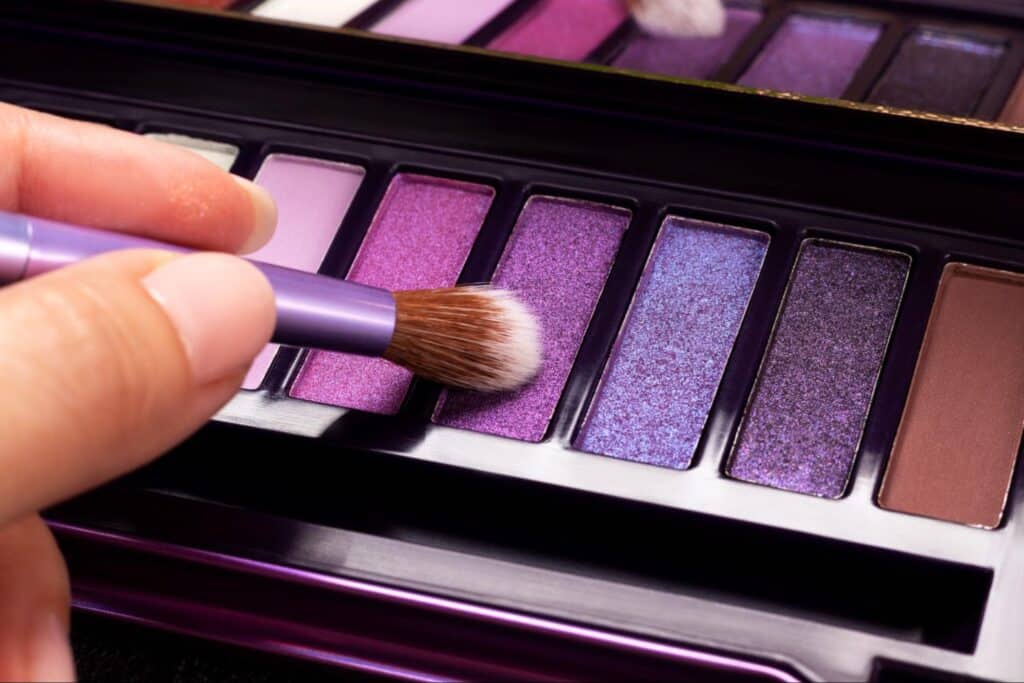
Real-world uses highlight the power of each pigment type:
- Foundations and Concealers: Traditional pigments anchor full-coverage face products, offering a natural-looking base. Occasionally, a subtle use of effect pigments can introduce a luminous glow without compromising overall coverage.
- Highlighters and Illuminators: Effect pigments deliver a reflective, dewy finish on cheekbones or brow bones. This approach creates a high-impact, light-catching glow that reflects current consumer trends around inner radiance and “lit-from-within” beauty.
- Lip Products: Matte formulations rely primarily on traditional pigments, while effect pigments add shimmer and depth to glosses, metallic lipsticks, and lip toppers.
- Eyeshadows and Bronzers: Traditional pigments work best for matte options. Incorporating effect pigments can yield multidimensional textures, ideal for statement eye looks or glimmering contours.
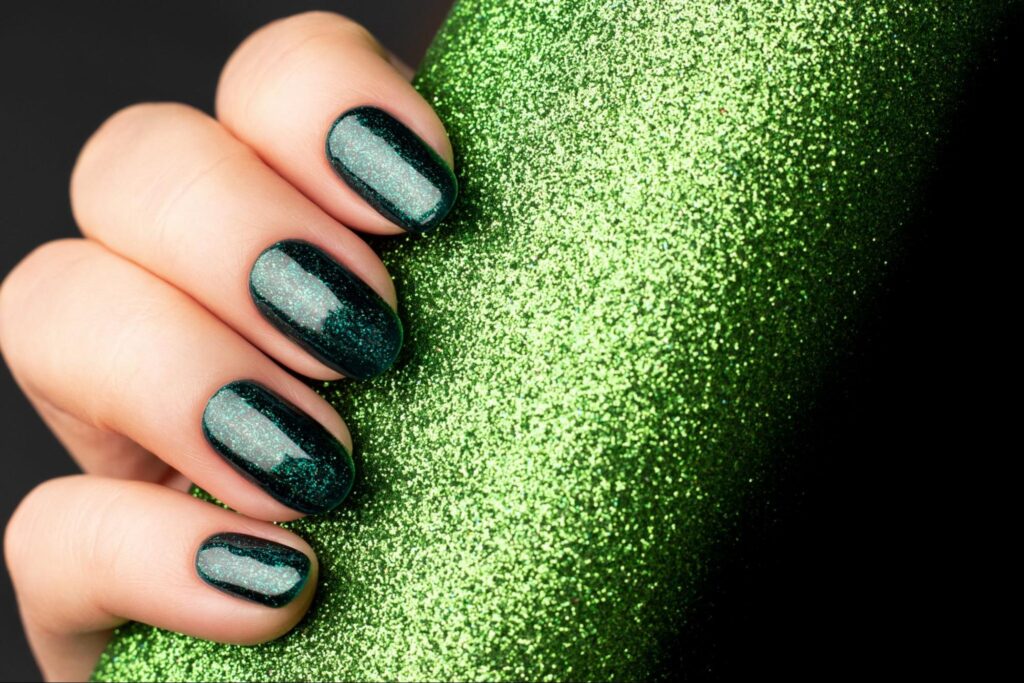
- Nail Polishes: Plain color from traditional pigments is a staple, yet effect pigments bring playful transformations with color-shifting or pearlescent finishes.
Formulation and Performance Considerations for Pigment Selection
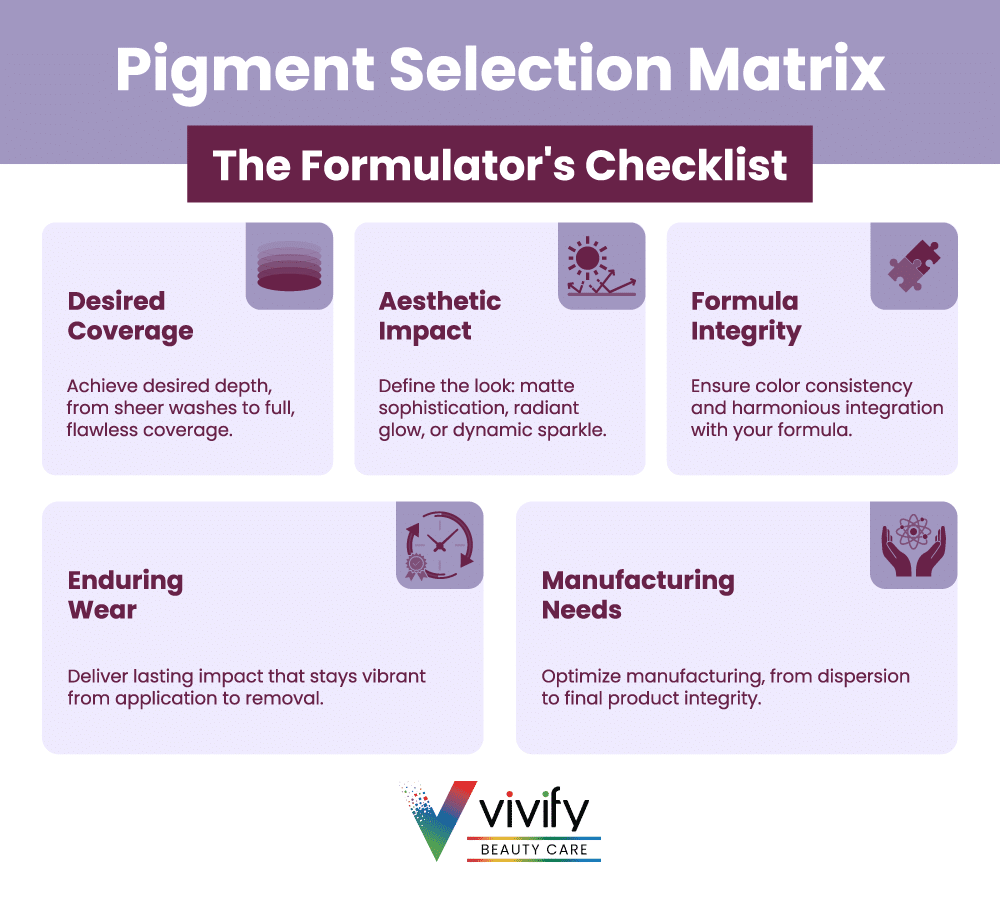
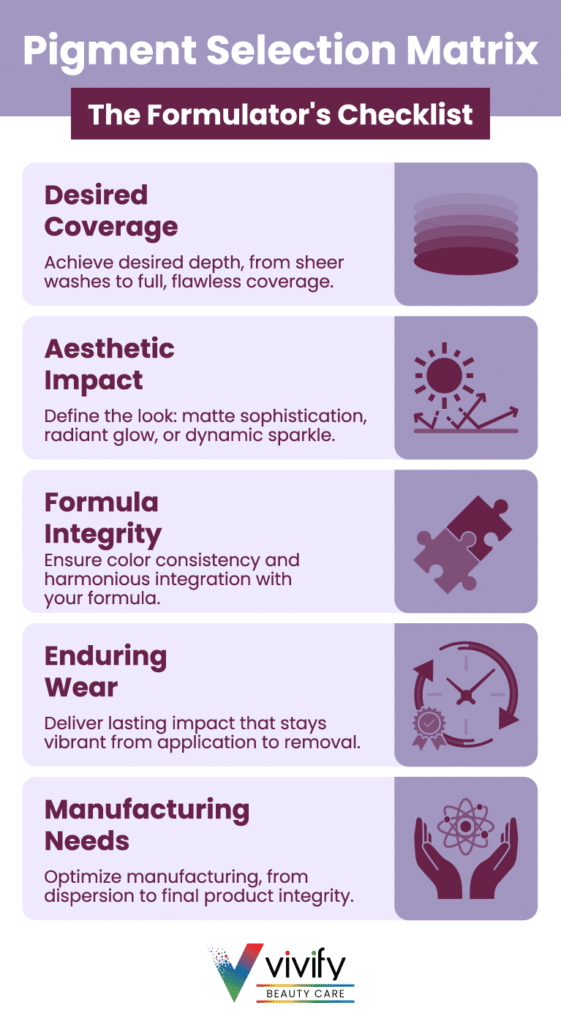
Managing pigment performance ensures that color results match consumer expectations and align with your brand’s goals. When deciding on pigments, be sure to align their properties with your product’s requirements and desired aesthetics.
Coverage & Opacity
Traditional pigments provide strong base color and more complete coverage, making them ideal for foundations, concealers, and products where uniform opacity and shade accuracy are critical.2–4
Effect pigments are typically used alongside traditional pigments to boost luminosity and dimension; they work best in strategic layers to create highlights, glow, or special effects rather than serving as the primary coverage.5,6
Light Interaction & Finish
Traditional pigments yield a matte or low-sheen, non-reflective finish that minimizes shine and visual texture on the skin, supporting natural, everyday looks.1,2
Effect pigments are designed to interact with light, reflecting it to create pearlescent, metallic, shimmering, or color-shifting effects, allowing finishes that range from soft radiance to high-impact, multidimensional shine.5–7
Stability & Compatibility
Traditional pigments generally excel in stability and fade resistance, maintaining consistent color over time and across batches in a wide range of systems.2–4
Effect pigments require more careful formulation to preserve platelet structure and visual intensity, and they need compatibility checks with the base (emulsions, anhydrous systems, gels) to avoid loss of reflectivity, settling, or color change.6,7
Wear and Longevity
Traditional pigments usually perform well with standard binders and film-formers to deliver durable, long-lasting coverage in many formats.2,4
Effect pigments may require additional or specialized binders to keep particles anchored while preserving their luminosity, especially in high-shine or high-sparkle products where maintaining the effect over time is critical.6
Processing / Handling Guidelines
Traditional pigments are generally straightforward to disperse and tolerate higher shear during processing without significant impact on performance.2,4
Effect pigments often need gentler handling and are frequently added later in the process to avoid breaking platelet structures, helping preserve their intended finish and intensity.6,7
In most modern cosmetic formulations, traditional and effect pigments are used in conjunction—traditional pigments build the base shade, opacity, and consistency, while effect pigments enhance the finish with radiance, dimension, and visual impact. Supported by the right functional ingredients and processing approach, this balanced combination helps ensure your final product meets both performance and aesthetic goals from the lab through to final application. In parallel, ensure you remain compliant with FDA color additive guidelines and prioritize ethical sourcing—particularly for mica-based pigments—to meet regulatory and consumer expectations.
Trends and Innovations in Pigment Use
Modern demands drive fresh pigment innovations:
- Shimmer-Driven Appeal: Social media has amplified the popularity of holographic and sparkling finishes. Many new formulations showcase dramatic color effects and dynamic light interactions, which resonate with global beauty trends and inspire innovative cosmetic storytelling.
- Hybrid Formulations: Many new products integrate color coverage with multifunctional benefits, combining traditional pigments with skincare-oriented properties. By jointly using ingredients that both nourish and color the skin, brands can offer formulations that cater to both aesthetics and functionality.
- Clean Beauty and Ethical Sourcing: Consumer awareness of responsible ingredient sourcing is higher than ever. Brands increasingly align with initiatives such as the Responsible Mica Initiative and emphasize cruelty-free practices. Ethical sourcing and transparency help build and maintain consumer trust.
- Advanced Manufacturing Techniques: Improved production processes now enable more consistent pigment particle sizes and shapes, allowing for precise color replication. As a result, color consulting for cosmetics benefits from greater predictability in matching specific shades and effects at scale.2,6
Beyond these trends, niche developments such as thermochromic and photochromic pigments underscore the industry’s ongoing push for inventive finishes with standout consumer appeal.
Frequently Asked Questions: Effect Pigments vs. Traditional Pigments
What are effect pigments in cosmetics?
Effect pigments are specialty colorants that interact with light to create shimmer, pearlescence, metallic shine, sparkle, or color shifts. They are usually based on layered substrates like mica, synthetic mica, or borosilicate and are used mainly to control finish rather than coverage.5–7
What is the main difference between effect pigments and traditional pigments?
Traditional pigments (e.g., iron oxides, titanium dioxide) provide base color and opacity, often with a matte or low-sheen finish. Effect pigments are more transparent and are added to modify appearance—creating glow, shimmer, or multidimensional effects.1–6
Can I mix traditional and effect pigments in the same formulation?
Yes. Most formulas combine traditional pigments for coverage and color with effect pigments for finish and visual impact. The key is proper dispersion of traditional pigments and gentle handling of effect pigments to preserve their structure and reflectivity.6,7
Do effect pigments change wear and stability?
They can. Traditional pigments usually deliver robust coverage and color stability, while effect pigments may require tailored binders and compatibility checks to maintain their brilliance and prevent settling or dulling over time.2,4,6
How do I choose the right pigment blend for my cosmetic formulation?
Define the product type, desired finish, and regulatory/brand constraints, then use traditional pigments for base shade and opacity and add effect pigments to achieve the desired light interaction. Final choices should be confirmed through stability, compatibility, and wear testing in your specific system.
Achieving the Ideal Balance: Traditional vs. Effect Pigments
Traditional pigments deliver consistent, matte coverage that is perfect for everyday cosmetics, while effect pigments bring eye-catching brilliance and dynamic visual effects to specialized lines.1–3,5,6 By integrating both pigment types, brands can address a broad spectrum of consumer preferences—from subtle daily wear to dazzling evening statements.
Discover how our innovative pigment solutions—and our curated selection of functional ingredients—can truly transform your product line. Contact Vivify Beauty Care today for personalized support, and explore our extensive pigment portfolio to elevate your next beauty formulation!
References
- Pérez-Arantegui, J. (2021). Not only wall paintings—pigments for cosmetics. Archaeological and Anthropological Sciences, 13(11), 189. https://doi.org/10.1007/s12520-021-01399-w
- Pfaff, G. (2022). The world of inorganic pigments. ChemTexts, 8(1), 15. https://doi.org/10.1007/s40828-022-00166-1
- Pfaff, G. (2021). Iron oxide pigments. Physical Sciences Reviews, 6(6), 535–548. https://doi.org/10.1515/psr-2020-0179
- Gázquez, M. J., Bolívar, J. P., Garcia-Tenorio, R., & Vaca, F. (2014). A review of the production cycle of titanium dioxide pigment. Materials Sciences and Applications, 5(7). https://doi.org/10.4236/msa.2014.57048
- Pfaff, G., & Reynders, P. (1999). Angle-dependent optical effects deriving from submicron structures of films and pigments. Chemical Reviews, 99(7), 1963–1982. https://doi.org/10.1021/cr970075u
- Maile, F. J., Pfaff, G., & Reynders, P. (2005). Effect pigments—past, present and future. Progress in Organic Coatings, 54(3), 150–163. https://doi.org/10.1016/j.porgcoat.2005.07.003
- Cavalcante, P. M. T., Dondi, M., Guarini, G., Barros, F. M., & da Luz, A. B. (2007). Ceramic application of mica–titania pearlescent pigments. Dyes and Pigments, 74(1), 1–8. https://doi.org/10.1016/j.dyepig.2006.01.026