Key Takeaways
- Conditioning agents are fundamental to hair care performance, reducing friction and static, forming protective films, and delivering detangling, softness, shine, and moisture management.
- Four main classes—quats, conditioning polymers, silicones, and guar—play distinct but complementary roles, from strong immediate conditioning (quats) to long-lasting effects and formulation rheology control (polymers), premium sensory and protection (silicones), and “clean,” mild positioning (guar).
- The “right” conditioning system depends on hair type, product format, marketing constraints (e.g., silicone-free, naturally derived, sulfate-free), and regional regulatory requirements—most successful formulas use a tailored blend, not a single hero ingredient.
- Careful selection and optimization can prevent issues like buildup, heaviness, or incompatibility while enabling on-trend claims such as clean, scalp-focused, or sustainable formulations.
- Partnering with an ingredient supplier like Vivify helps formulators choose and combine conditioning agents efficiently, de-risking development and aligning performance with both technical and brand goals.
Conditioning agents for hair care are essential for developing products that deliver superior performance and support healthy-looking, manageable hair. By targeting dryness, frizz, and tangling, these key ingredients transform shampoos, conditioners, masks, and leave-ins into high-performing solutions that meet today’s elevated consumer expectations.
In a competitive hair care market, formulators must balance technical efficacy with consumer-friendly benefits and claims. Conditioning agents work by reducing friction, neutralizing static, and forming protective films over hair fibers, resulting in soft, smooth, and shiny hair with improved combability and reduced breakage.1,4 This guide provides a clear overview of four major classes of conditioning agents—quaternary ammonium compounds (quats), polymers, silicones, and guar—highlighting their benefits, applications, and key formulation considerations.
Whether you are an R&D chemist, formulation scientist, or procurement professional, you’ll find practical insights to help you select the right conditioning system for your targets. Vivify Beauty Care supports this process with consultative technical guidance and a robust ingredient portfolio for hair care benefits, helping ensure that even complex formulations achieve their intended performance.
How Conditioning Agents Work on Hair Fibers
Healthy and damaged hair fibers both carry a net negative charge at typical shampoo and conditioner pH, and this charge becomes more pronounced after chemical services, UV exposure, or frequent washing.2,3 Conditioning agents—especially cationic ingredients like quats and certain polymers—are designed to be positively charged, so they are electrostatically attracted to the hair surface.1–3
Once deposited, these agents form a thin, continuous film along the cuticle. This film smooths the hair surface and reduces the friction that occurs when strands rub against each other or against combs and brushes.1,4,5 Lower friction means less mechanical damage, fewer snags, and improved “slip” during both wet and dry combing.
Together, charge neutralization and film formation translate into key performance attributes, including:
- Detangling and combing ease – reduced snagging and combing force on wet and dry hair
- Frizz and static control – fewer flyaways and smoother cuticle alignment
- Enhanced shine and softness – a smoother surface that reflects light more evenly
- Moisture management – helping retain hydration and reduce the perception of dryness1,2,4
Types of Conditioning Agents Used in Hair Care
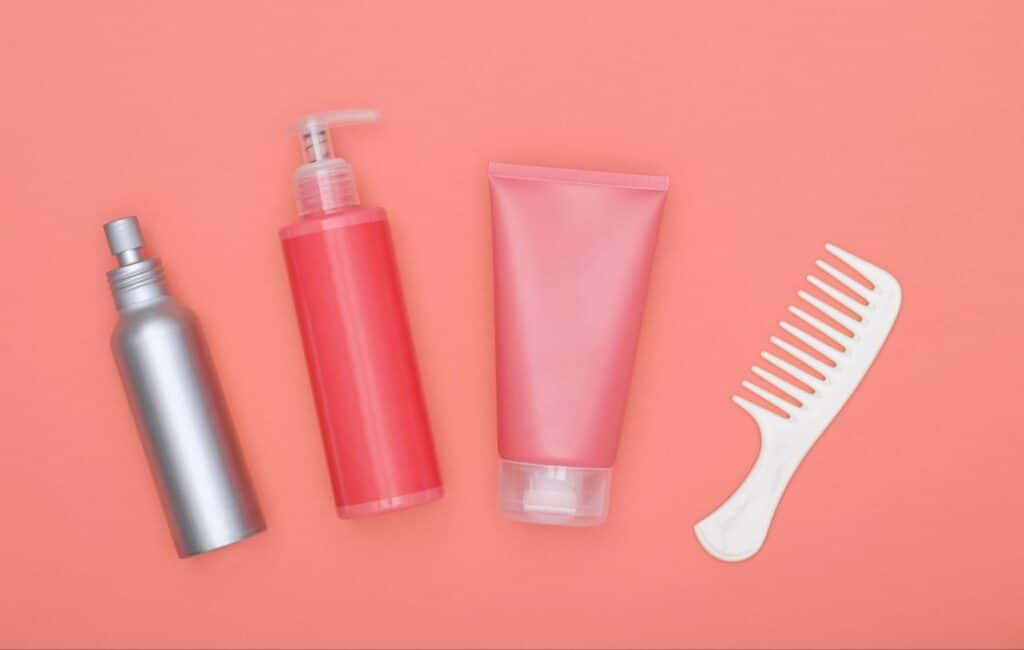
Most hair care formulations rely on a combination of conditioning agents to deliver the right balance of detangling, softness, shine, and long-lasting performance. Four major categories—quaternary ammonium compounds (quats), conditioning polymers, silicones, and guar-based/natural polymers—each contribute differently to deposition, film formation, sensory feel, and marketing claims. Understanding how they complement one another helps formulators design targeted conditioning systems for specific formats, hair types, and brand positions.
Quaternary Ammonium Compounds (Quats)
Quats are cationic surfactants with a strong affinity for the negatively charged surface of hair fibers. Their high substantivity makes them some of the most efficient conditioning agents in rinse-off products.1,2,5
Key benefits:
- Strong detangling and softness through reduced friction along the hair shaft
- Static control and fewer flyaways by neutralizing negative charge
- Improved wet and dry combing due to a lubricating, protective film1,2,4,5
Typical uses:
- Rinse-off conditioners and hair masks
- Intensive treatments and some leave-ins where strong, immediate conditioning is desired
Formulation watch-outs:
- Buildup risk at high use levels, especially on fine or low-porosity hair
- Compatibility with anionic surfactants must be carefully managed
- Need to balance performance with desired sensorial profile (weight, slip, rinsability)
Vivify’s portfolio includes quaternary ammonium conditioning agents such as AccessQUAT CTAC29 that can be tuned for daily conditioners, intensive masks, and targeted leave-ins.
Conditioning Polymers
Conditioning polymers provide versatile tools for tuning both performance and rheology. Many are designed to be cationic or amphiphilic so they can deposit selectively onto hair while also contributing to product structure.1,4,6
Roles and benefits:
Cationic conditioning polymers
- Enhance deposition and long-lasting conditioning between washes
- Improve wet and dry combing, softness, and manageability1,4,6
Film-forming polymers
- Create a continuous, flexible film that helps lock in moisture
- Can boost shine and help control frizz by smoothing the cuticle1,4
Rheology modifiers / thickening polymers
- Contribute to viscosity, suspension, and stability in formulas
- Help achieve desired texture and application aesthetics
Typical uses:
- Shampoos and 2-in-1 systems
- Rinse-off conditioners, treatments, and masks
- Leave-in creams, sprays, and serums—especially when longer-lasting effects are required
Silicones for Sensory and Protection
Silicones are widely used for their ability to deliver a premium, instantly recognizable sensory profile. Their unique structures allow them to spread easily, form smooth, flexible films, and enhance surface properties of the hair fiber.4,7
Key benefits:
- Instant shine through a smooth, light-reflective surface film
- Slip and softness, providing a silky, conditioned feel on both wet and dry hair
- Frizz control, particularly in humid environments, via moisture-resistant films
- Heat and surface protection with specific silicones that help shield hair during styling4,7
Typical uses:
- Rinse-off conditioners and intensive treatments
- Leave-in creams, serums, and oils
- Styling products where slip, shine, and protection are core claims
Formulation watch-outs:
- Potential buildup and “heavy” feel if not dosed and emulsified correctly
- Need for proper emulsification and dispersion to avoid separation
- Consideration of silicone-free or low-build-up positioning, which may require partial or full replacement with advanced polymers or natural alternatives7
Guar as a Naturally Derived Conditioning Polymer
Guar and its derivatives represent an important class of naturally derived conditioning polymers that support “clean” and mild positioning while still contributing measurable performance in hair care formulations.1,8
Key benefits:
- Naturally derived conditioning and improved manageability, especially in shampoo systems
- Enhanced slip to reduce combing friction and help prevent breakage
- Viscosity building and thickening, contributing to desired texture and stability
- Strong fit with naturally derived and silicone-free marketing stories when combined with other functional naturals6,8
Typical uses:
- Shampoos, including sulfate-free systems, where light conditioning and slip are required
- Lightweight conditioners and everyday treatments
- Formulas targeting “clean beauty,” mildness, or reduced synthetic load
Vivify offers self-hydrating cationic guar grades such as AccessGUAR HP-012 that combine conditioning, thickening, and clarity benefits for modern shampoo and treatment systems.
Formulation watch-outs:
- Proper hydration and dispersion are critical to unlock full performance and avoid lumping
- Often needs to be combined with other conditioning agents (e.g., quats or conditioning polymers) to match the richer sensory profile of silicone-heavy systems
- Viscosity and clarity can be sensitive to electrolyte level, pH, and surfactant package
Together, these four classes of conditioning agents give formulators a toolbox for tailoring sensorial feel, performance, and positioning across a wide range of hair care formats and consumer needs.
Comparing Conditioning Agents for Hair Care
Choosing the right conditioning agents often means balancing immediate sensory impact, long-term benefits, and marketing constraints. The table below summarizes how quats, conditioning polymers, silicones, and guar compare across key criteria.
| Conditioning Agent | Best For | Typical Formats | Key Pros | Watch-Outs / Limitations |
| Quaternary Ammonium Compounds (Quats) | Strong conditioning; wet combing; anti-static | Rinse-off conditioners, masks, treatments | High substantivity; excellent detangling and softness | Buildup and weight on fine hair; anionic compatibility issues |
| Conditioning Polymers | Long-lasting conditioning; structure | Shampoos, 2-in-1s, conditioners, leave-ins | Conditioning, film formation, rheology control | Can weigh hair down; sensitive to pH and system |
| Silicones | Sensory; shine; slip; heat/frizz control | Conditioners, serums, leave-ins, stylers | Immediate shine, smoothness, frizz control | Buildup/heaviness; not for strict silicone-free |
| Guar (Naturally Derived Polymer) | Light conditioning in “clean” systems | Shampoos, light conditioners, daily care | Naturally derived; adds slip and viscosity | Needs good hydration; often needs co-conditioners |
In practice, most high-performing hair care products use blends of these agents. Quats deliver strong, immediate conditioning in rinse-off systems; conditioning polymers extend benefits and help control rheology; silicones provide premium shine, slip, and protection; and guar supports mild, naturally derived positioning, especially in cleansing formats.1,4,6–8 By combining them strategically—and adjusting levels by hair type, format, and marketing goals—formulators can design conditioning systems that meet both performance and brand requirements.
How to Choose the Right Conditioning System for Your Formulation
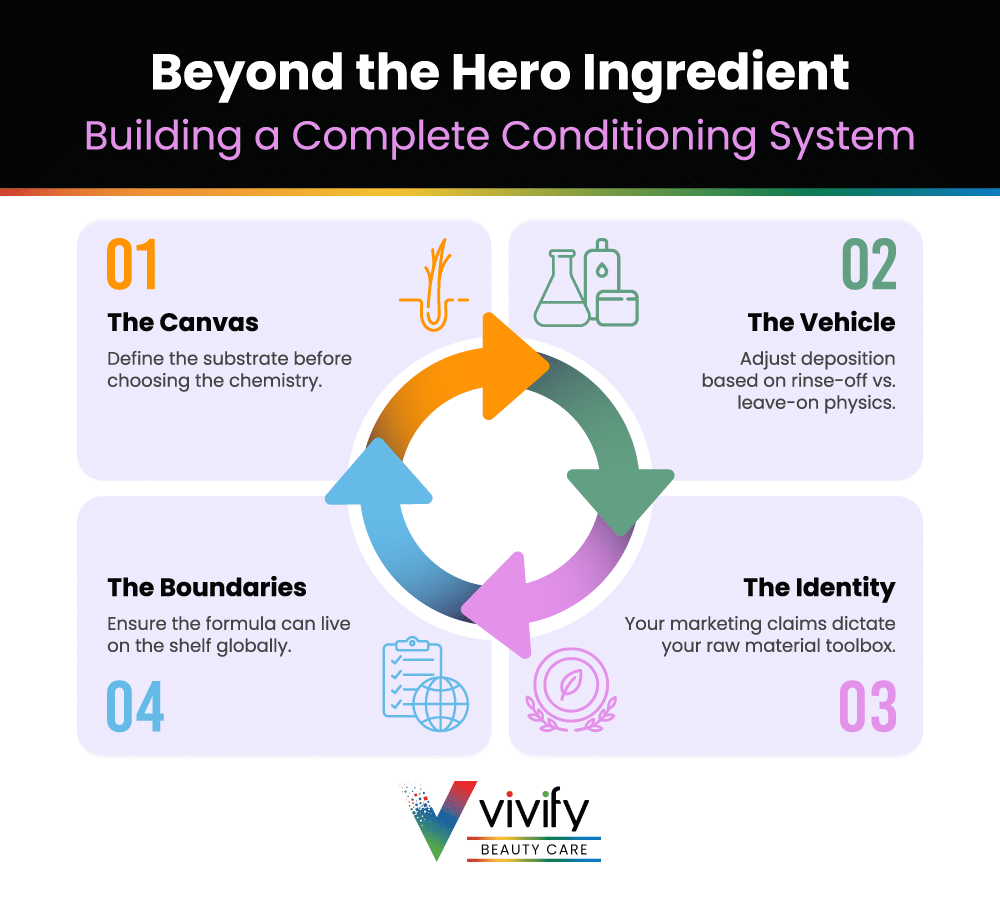
Selecting the right conditioning system means balancing technical performance with consumer expectations, regulatory requirements, and brand positioning. Rather than relying on a single “hero” ingredient, most successful formulas combine quats, polymers, silicones, and naturally derived agents like guar in a way that fits the specific brief.1,2
1. Start with Hair Type and Target Consumer Need
Different hair types and concerns call for different conditioning profiles and load levels:2,7
Fine or easily weighed-down hair
- Favor: lighter cationic polymers, low-viscosity silicones (or silicone alternatives), low-use-level quats.
- Avoid: heavy, highly substantive quats or high levels of dimethicone that can make hair feel flat or greasy.7
Coarse, very dry, or highly porous hair
- Favor: richer quat systems, higher conditioning polymer levels, heavier silicones, and occlusive agents to boost slip and softness.
- Combine: quats + film-forming polymers for lasting manageability.1,2,4
Curly, coily, or textured hair
- Favor: systems that maximize slip, frizz control, and moisture retention (cationic polymers, select silicones, and oils).
- Consider: compatibility with popular styling routines (e.g., “curly girl” approaches, co-washing, low-sulfate cleansers).
Color-treated or chemically damaged hair
- Favor: conditioning agents that offer cuticle repair perception, reduced combing force, and surface protection (quats, cationic polymers, silicone blends, protein-based actives).
- Emphasize: heat and UV protection, reduced breakage, and long-lasting conditioning between washes.1,2,7
2. Match the Conditioning System to the Product Format
Each format places different demands on deposition, rinse profile, and sensorial feel:
Shampoos / 2-in-1 products
- Favor: cationic conditioning polymers and guar derivatives that can co-exist with surfactants.
- Aim for: light-to-moderate conditioning, good wet combing, minimal buildup.
Rinse-off conditioners and masks
- Favor: more substantive quats, richer polymer systems, and targeted silicones for slip and shine.
- Adjust: load level by positioning (daily vs intensive repair).
Leave-in sprays, creams, and serums
- Favor: carefully balanced quats and polymers at lower levels, plus silicones or silicone alternatives tailored for sensory and protection.
- Prioritize: non-greasy feel, no visible residue, and compatibility with styling.
Oils, glosses, and finishing products
- Favor: high-sensory silicones or lightweight natural oils, potentially combined with film-forming polymers.
- Focus: shine, frizz control, and consumer-perceived “finish.”
3. Align with Marketing and Brand Constraints
Marketing requirements can significantly shape your conditioning toolbox:
Naturally derived / high natural index
- Favor: guar and other naturally derived polymers, plant oils, and bio-based conditioning actives.
- Limit: some traditional synthetic polymers and certain silicone types, depending on brand thresholds.
Silicone-free or low-build-up claims
- Replace or reduce: conventional silicones with advanced polymers and naturally derived alternatives that still deliver slip and shine.
- Highlight: “silicone-free,” “weightless conditioning,” or “residue-free” where appropriate.
Vegan, cruelty-free, and allergen-conscious
- Check: sources of cationic polymers and quats; avoid animal-derived components.
- Minimize: sensitizing preservatives, fragrances, or quats with known irritation profiles where required by brand.
Sulfate-free or mild cleansing systems
- Ensure: conditioning agents (especially cationic polymers and guar derivatives) are compatible with alternative surfactants.
- Optimize: viscosity and foam quality, which often behave differently than in sulfate-based systems.
4. Consider Regulatory and Regional Requirements
Regulatory frameworks and regional preferences can narrow or redirect your conditioning choices:
Ingredient approvals and use-level limits
- Confirm: that chosen quats, polymers, and silicones are permitted and within maximum allowed concentrations in target markets.
- Monitor: evolving regulations on microplastics, certain quats, and specific silicone chemistries.
Regional market expectations
- EU/UK: heightened attention to microplastics, biodegradability, and environmental impact.
- North America: strong demand for performance plus trend-driven claims (curl care, repair, bonding).
- APAC/Latin America: regional differences in hair type and climate may drive higher demands for humidity resistance, anti-frizz, and UV/heat protection.
Labeling and claims substantiation
- Ensure: technical data or testing supports claims such as “reduces breakage,” “improves combing,” “long-lasting conditioning,” “frizz control,” etc.
- Coordinate: with regulatory and marketing teams early to avoid reformulation later.
By systematically working through hair type, product format, marketing constraints, and regulatory frameworks, formulators can build targeted conditioning systems that perform in the lab, resonate with consumers, and comply in all intended markets.1,2 This is also where partnering with an ingredient supplier like Vivify can streamline selection, optimization, and validation across complex formulation briefs.
Practical Applications and Emerging Trends
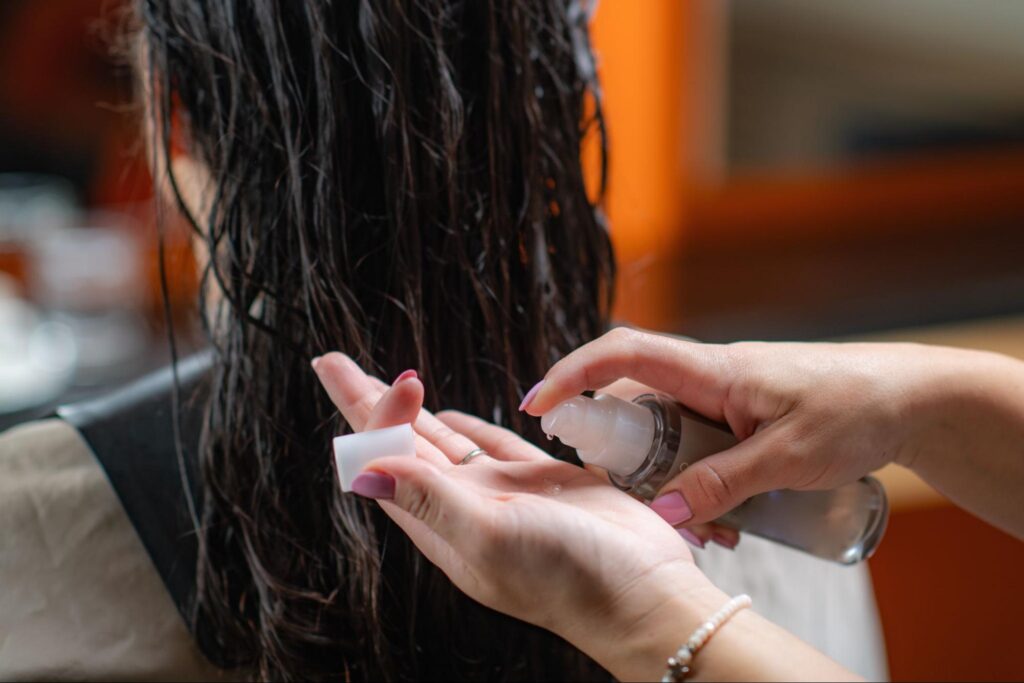
As the hair care landscape evolves, formulators are leveraging innovative approaches to meet shifting consumer expectations. Key trends include:
- Clean Formulations: Transparency and simplicity have driven the adoption of naturally derived agents like guar and bio-based conditioning polymers, especially in sulfate-free and silicone-free systems.
- Scalp-Focused Products: Increasingly, mild conditioning ingredients are being formulated to support scalp health alongside hair aesthetics. Explore related hair and scalp care actives when building scalp-first concepts.
- Hybrid Solutions: Multifunctional options that blend UV protection, heat shielding, and conditioning address multiple consumer needs in a single formula. Advanced delivery systems can further enhance deposition and targeted performance.
- Sustainable Innovation: Renewable and biodegradable conditioning agents continue to align with consumer trends for reducing environmental impact, particularly in markets with heightened focus on microplastics and persistent materials.
Vivify Beauty Care: Your Expert Partner in Hair Care Innovation
For formulators aiming to create cutting-edge hair care products, Vivify Beauty Care stands as a trusted partner. With over 15 years of expertise and a global reach, Vivify offers:
- A Diverse Ingredient Portfolio: From effect pigments to functional ingredients and innovative hair care actives, gain access to specialized solutions that support conditioning, repair, protection, and sensorial impact.
- Expert Technical Support: Benefit from personalized formulation guidance, rapid prototyping, and regulatory compliance support.
- Responsive Service: Enjoy quick sampling and reliable inventory management to accelerate your time-to-market.
- Tailored Solutions: Whether you are an indie innovator or an established leader, Vivify’s customized support solutions are designed to meet your unique needs.
Optimizing Hair Care Products with Effective Conditioning Systems
Conditioning agents are central to delivering the detangling, softness, shine, and protection that define high-performing hair care products. Selecting the right combination of quats, polymers, silicones, and naturally derived polymers like guar—tailored to hair type, format, and claims—is critical to meeting both technical and marketing goals.1,2,4,6–8
To discuss the best conditioning system for your next formulation or to review options from Vivify’s portfolio, contact our team for personalized guidance and formulation support.
References
- Fernández-Peña, L., & Guzmán, E. (2020). Physicochemical aspects of the performance of hair-conditioning formulations. Cosmetics, 7(2), 26. https://doi.org/10.3390/cosmetics7020026
- Dias, M. F. R. G. (2015). Hair cosmetics: An overview. International Journal of Trichology, 7(1), 2–15. https://doi.org/10.4103/0974-7753.153450
- Dupres, V., Duc, T. M., Lebacqz, C., & Rouxhet, P. G. (2007). Wetting and electrical properties of the human hair surface: Delipidation observed at the nanoscale. Journal of Colloid and Interface Science, 306(1), 34–40. https://doi.org/10.1016/j.jcis.2006.10.030
- Bhushan, B. (2008). Nanoscale characterization of human hair and hair conditioners. Progress in Materials Science, 53(4), 585–710. https://doi.org/10.1016/j.pmatsci.2008.01.001
- Mizuno, H., Luengo, G. S., & Rutland, M. W. (2010). Interactions between crossed hair fibers at the nanoscale. Langmuir, 26(24), 18909–18915. https://doi.org/10.1021/la103001s
- Hössel, P., & Dieing, R. (2000). Conditioning polymers in today’s shampoo formulations. International Journal of Cosmetic Science, 22(1), 1–10. https://doi.org/10.1046/j.1467-2494.2000.00003.x
- de Melo Carvalho, R., Melo, D. F., Kelati, A., & Tosti, A. (2025). With or without silicones? A comprehensive review of their role in hair care. Skin Appendage Disorders. Advance online publication. https://doi.org/10.1159/000546651
- McMullen, R. L., Laura, D., Zhang, G., & Kroon, B. (2021). Investigation of the interactions of cationic guar with human hair by electrokinetic analysis. International Journal of Cosmetic Science, 43(4), 375–390. https://doi.org/10.1111/ics.12704