

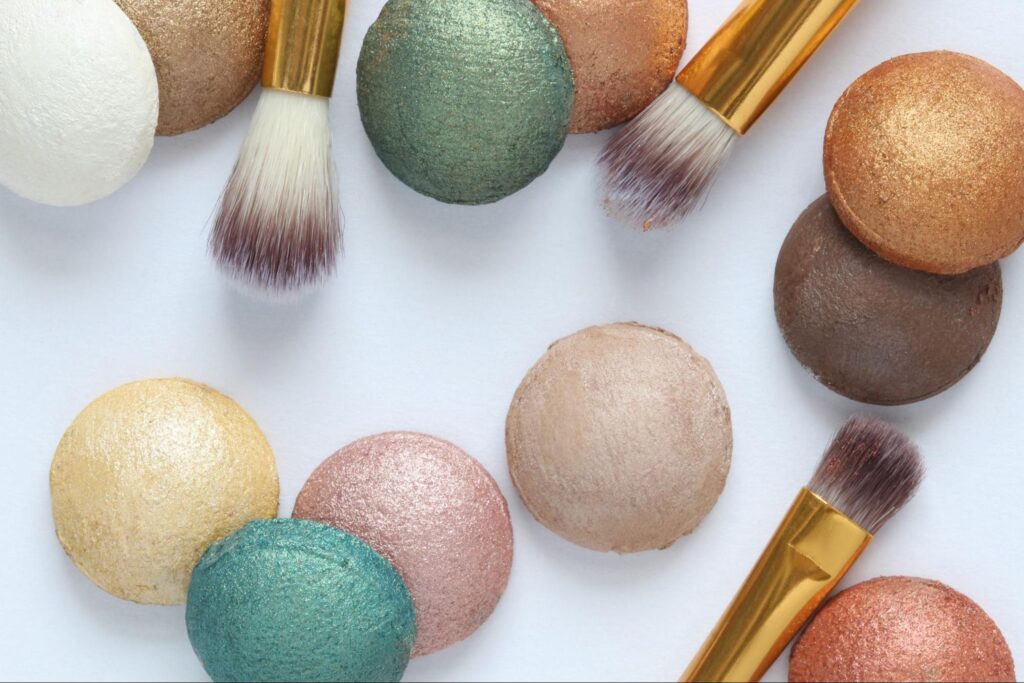
Key Takeaways
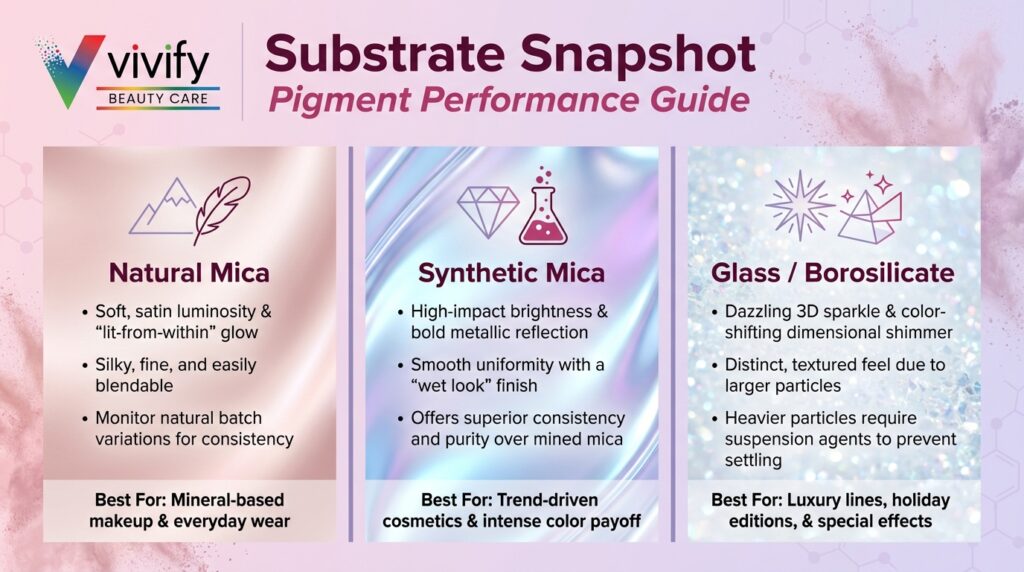
- Substrate choice drives the final effect and feel. Natural mica delivers a softer glow, synthetic mica boosts brightness/metallic payoff with strong consistency, and borosilicate creates the highest-impact sparkle and color shift.
- Match the pigment to the formula format. Powders generally suit mica-based pearls easily, while liquid/cream systems require extra attention to dispersion and stability—especially with heavier borosilicate pigments.
- Particle size matters as much as substrate. Smaller particles create a smooth, satin “lit-from-within” sheen; larger particles produce more visible sparkle, and blending sizes can add dimension.
- Marketing claims and regulations should be considered early. “Natural/mineral-based” positioning aligns more easily with natural mica, while synthetic mica may require clearer claim language and market-specific compliance checks.
- Testing and stabilization are essential for real-world performance. Prototype in small batches, evaluate skin feel and wear, and use appropriate thickeners/stabilizers to prevent settling and maintain a consistent finish.
Creating radiant, eye-catching cosmetics begins with thoughtful selection of the right pearl effect pigment substrate. More than mere decoration, these pigments add shimmer, texture, and an appealing visual dynamic to a product’s overall finish. The substrate—the core material on which the pigment is built—plays a critical role in achieving the desired optical and sensory qualities. Pearlescent pigments function through the principle of light reflection and refraction at thin single and multiple layers, producing characteristic luster, brilliance, and iridescent colors.1 Whether your aim is a soft satin radiance, a bold metallic shimmer, or a dazzling, multidimensional sparkle, understanding substrate differences is essential for formulating cosmetics that perform while aligning with your brand’s market goals.
This guide reviews the three main substrate options—natural mica, synthetic mica, and borosilicate—and explains how to choose the appropriate one based on finish goals, formulation type, sensory impact, and regulatory considerations. It also delves deeper into scenario-based recommendations and practical tips for selecting the best substrate for various product types, from pressed powders to liquid formulations. By the end of this guide, you will feel more confident in formulating with pearl effect pigments.
At-a-Glance: How to Choose the Right Substrate
- Natural Mica: Known for delivering a soft, subtle glow and a smooth feel at a relatively lower cost, it is often found in products emphasizing mineral-based ingredient profiles. Natural mica coated with thin films of metal oxides such as titanium dioxide or iron oxide represents the dominant class of pearlescent pigments.2 Because it is derived from mineral deposits, there can be slight batch variability.
- Synthetic Mica: Engineered to maximize brightness, color consistency, and bold metallic effects, synthetic mica (synthetic fluorphlogopite) produces striking finishes in modern formulations. Its lab-controlled production ensures uniform particle size and intense reflectivity, with whiteness exceeding 90% in high-quality grades.3,4 In products positioned as completely “natural,” clear labeling and justification may be needed.
- Glass/Borosilicate: Offering a dazzling, high-impact sparkle and multidimensional color shifts, borosilicate substrates are ideal for premium or specialty products. Borosilicate glass flakes are highly planar platelets with very smooth surfaces and are transparent, enabling superior light reflection.5 They disperse best with careful formulation adjustments to account for heavier particle weight.
By aligning your substrate choice with product type, marketing claims, and desired finish, you can enhance formulation performance while meeting consumer expectations and regulatory requirements in your target markets.
Choose Natural Mica When…
Natural mica pearls are ideal if your formulation calls for a softer aesthetic and a smooth, easily blendable finish.
A Soft, Subtle Glow
- Visual Appeal: Natural mica delivers a gentle, warm shimmer that works perfectly for everyday highlighters, blushes, and finishing powders aiming for a “lit-from-within” look. The luster and appearance of pearlescent pigments are influenced by several elements, including flake orientation, particle size, pigment concentration, and coating film transparency.1
- Cost Efficiency and Versatility: Natural mica is often more affordable than synthetic alternatives while still offering appealing luminosity. It is especially popular in mineral-based makeup lines.
- Smooth Sensory Experience: With its fine, silky texture, natural mica enriches pressed powders and loose powders, giving a light, comfortable application.
Explore Vivify’s natural mica options for a wide range of particle sizes and coating options to customize your formulations.
Key Considerations
- Batch Variability: As a naturally mined material, its optical and physical attributes can vary slightly. Natural mica can sometimes have a duller appearance or contain trace elements that affect its color compared to synthetic alternatives.4 Work closely with suppliers who maintain strict quality controls to stabilize color and particle size. Adjust your formulation if you detect minor differences in color intensity.
- Regulatory Compliance: Confirm your mica source meets cosmetic-grade purity standards to avoid contaminants, especially for companies operating across multiple regions.
- Claim Alignment: Natural mica is commonly used in products labeled “mineral-based” or “natural,” provided local definitions and requirements are followed. Always review relevant regulations to ensure clarity on labeling.
Practical Scenario-Based Suggestions
- Everyday Pressed Powders: If you aim to offer subtle pearlization in your daily-wear face powders or finishing veils, use smaller particle-size mica for a delicate sheen without visible sparkle. Smaller particles closer to 10 µm impart more of a soft texture matching a satin sheen coverage.6
- Body Shimmers: For body lotions or creams, combine natural mica with functional thickeners to keep the shimmering effect evenly dispersed, ensuring a uniform glow.
Choose Synthetic Mica When…
Synthetic mica, also known as synthetic fluorphlogopite, is designed to deliver enhanced brightness, consistency, and chromatic purity that stand out prominently in color cosmetics.
For Maximum Brilliance and Reflectivity
- Visual Impact: Synthetic mica’s engineered production translates into superior brightness, vivid interference colors, and bold metallic effects. Synthetic fluorphlogopite exhibits a high level of shimmer and reflectivity, imparting a pearlescent or metallic appearance to cosmetic products.3 It is a favorite for modern eyeshadows, high-shine lip glosses, and liquid highlighters that prioritize dramatic visual appeal.
- Uniformity Across Batches: Synthetic mica is manufactured under controlled conditions, resulting in a product of exceptional purity and consistent quality.4 Reliability in particle size and shape allows product development teams to scale without worrying about changes in sparkle or payoff between production runs. This uniformity minimizes reformulation efforts.
- Finish Control: For a polished, high-shimmer, or wet-look aesthetic, synthetic mica excels. You can produce intense, showstopping looks essential in trend-driven beauty lines seeking a “wow factor.”
Discover Vivify’s synthetic mica selection to find consistently bright, high-quality particles suitable for a range of innovative cosmetics.
Special Considerations on Labeling
- Natural Claims and Regulatory Scrutiny: Although synthetic mica works wonders in terms of reflectivity, it does not occur naturally. Products bearing “all-natural” claims might need careful explanation if synthetic mica is a key ingredient. Ensure your labeling and product descriptions remain clear and compliant with relevant cosmetics regulations.
Practical Scenario-Based Suggestions
- Dramatic Eye Palettes: Use synthetic mica in pressed or loose eyeshadows when formulating bold, high-impact shades designed to create metallic or color-shifting looks. Synthetic fluorphlogopite-based pearls exhibit a superior lustrous sparkling effect and high color purity with excellent payoff.3
- Metallic Liquid Formulations: Combine synthetic mica with film-formers in liquid applications—like metallic eyeliners or lip toppers—to achieve intense reflective effects that dry quickly and remain vibrant.
Choose Glass/Borosilicate When…
Glass and borosilicate-based pearlescent pigments, often called borosilicate pearls, are favored for delivering unique sparkle. They reflect light in several directions, resulting in dimensional shifts that catch the eye from multiple angles.
For Unparalleled Sparkle and Clarity
- Dazzling Effects: A transparent glass core maximizes reflected light from the metal oxide coatings. Borosilicate glass flakes offer uniform thickness, are highly planar and smooth, and are completely transparent, which when coated with metal oxides, displays color purity and high chroma.5,7 Borosilicate pearls exhibit a crystalline twinkle that’s unmatched in brilliance, making them ideal for statement cosmetics.
- Multidimensional Color Shifts: Captivating, angle-dependent color transitions suit innovative product lines looking to stand out. The interference colors observed are directly correlated to the thickness of the metal oxide coating, ranging from gold to red, violet, blue, and green as thickness increases from approximately 70 nm to 360 nm.6 These shifts are especially striking in glitter gels, lip toppers, and nail polishes.
- Premium Applications: The Cosmetic Ingredient Review Expert Panel concluded that borosilicate glasses are safe as cosmetic ingredients in the practices of use and concentration described in their safety assessment.5 Often reserved for high-end, limited-edition, or trend-focused lines, these substrates offer a luxurious aesthetic that supports premium pricing.
Explore the borosilicate lineup from Vivify to see how multidimensional sparkle can elevate your brand’s portfolio.
Key Considerations
- Texture and Suspension: Due to their heavier weight (real density reported at 2.6 g/cm³), borosilicate-based pigments can settle over time in liquid formulas.5 Leverage stabilizers like silica or carefully selected polymeric thickeners to maintain even dispersion.
- Cost: Their premium nature often comes with a higher price tag. Formulators typically use them in products where intense sparkle or captivating shifts justify the cost.
Practical Scenario-Based Suggestions
- High-End Nail Lacquers: Borosilicate pigments produce iridescent or holographic nail polishes with long-lasting shimmer. Combine them with suspension bases that prevent pigment sinking.
- Showcase Holiday Cosmetics: Limited-edition palettes and glitter-based products can feature borosilicate pearls for a standout dimensional effect that garners consumer attention during seasonal or celebratory launches.
Beyond the Basics: Testing, Layering, and Mixing
Once you select your key substrate, experimentation continues:
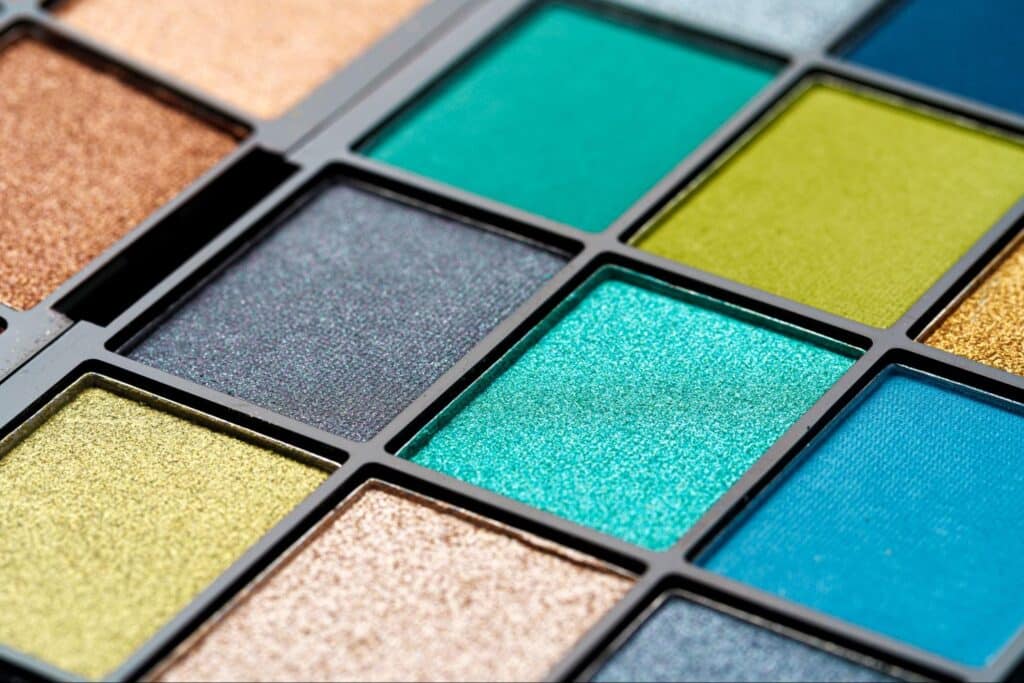
- Layering Different Substrates: For advanced color effects, combine natural mica and synthetic mica, or integrate borosilicate pearls with standard pigments. Layering can produce a richer visual complexity where one type provides the base sheen and another adds pops of brightness or sparkle.
- Particle Size Variations: Maintaining consistency in a given batch is crucial, but you can explore multiple particle sizes to achieve nuanced finishes. Smaller particles offer a gentle satin finish, while larger sizes closer to 60 µm display more of a dazzling pearlescent appearance, and average micron sizes of 125 and above produce visible sparkle.6
- Mixing With Functional Ingredients: Keep in mind how pearlescent substrates interact with emollients, binders, and potential opacifying ingredients. Note that pigmentary titanium dioxide, calcium carbonate, and talc can decrease or destroy the pearlescent shine by impeding light transmission.1 Explore Vivify’s functional ingredients range to optimize texture, stability, and performance.
Pearl Pigments and Their Role in Advanced Color Effects
When combined with conventional pigments and specialty additives, pearl effect pigments significantly enhance a cosmetic product’s visual complexity. For deeper color synergy, consider Vivify’s color consulting solutions. Mica-based pearlescent pigments add shimmer and iridescence that can elevate the visual dimension of skincare/makeup hybrids or color cosmetics. Rheology, pH compatibility, and additive interactions are equally vital for product stability and performance.
Formulators often employ coated or surface-treated pearls that optimize adhesion or reduce moisture sensitivity. By exploring different coating technologies—such as iron oxides, titanium dioxide, or silica—you can shift color undertones or improve shine control. Iron oxide (Fe₂O₃) mica pigments create colors of high luster effect, especially red colors and earth tones, whereas mica pigments coated with TiO₂/Fe₂O₃ produce gold color and those coated with TiO₂/Cr₂O₃ produce green color.8 These advanced color effects help products stand out on crowded store shelves.
How Substrate Selection Impacts Formulation and Marketing
The substrate not only influences visual and tactile qualities but also shapes marketing narratives:
- Natural/Mineral-Based Offerings: Natural mica becomes a prime candidate for indie brands, clean beauty lines, and consumer segments seeking a minimalistic approach to makeup.
- High-Performance or Trend-Driven Products: Synthetic mica fits perfectly in formulations that promise bold color, shine, and consistent quality—critical for brand reputations built on edgy or futuristic aesthetics.
- Luxury Positioning: Glass/borosilicate pearls pave the way for premium lines that demand a standout shimmer or sparkle. This substrate can become part of a brand’s storytelling, illustrating exclusivity through a noticeably lustrous appearance.
Common Selection Challenges and Tips
Even with the right pearl effect pigment substrate, a few common challenges can affect stability, sensory feel, and claim clarity. The tips below highlight the most frequent issues—formula balance, suspension in liquids, and region-specific labeling considerations.
- Overemphasis on a Single Component: Pearlescent pigments significantly contribute to shine and shimmer, but outstanding color effects usually result from a balanced combination of multiple ingredients. Ensure synergy among all elements—pigments, binders, actives, and functional ingredients.
- Misalignment with Marketing Claims: Including synthetic mica in products promoted as “natural” can lead to consumer confusion. Always review labeling regulations in your target markets and maintain transparency in disclaimers.
- Inadequate Suspension in Liquid Bases: Heavier substrates like glass pearls are prone to settling. Use appropriate thickeners and stabilizers to keep pigments evenly suspended, protecting visual consistency. Quality dispersion of pigments requires wetting the pigment surface, dispersing agglomerates, and distributing them uniformly through the base.9
- Ignoring Local Regulations: Different countries or regions may have varying definitions of “natural” and unique requirements for labeling effect pigments. Confirm that your chosen substrate and marketing language meet all relevant regulations.
Additional Considerations for Formulators
To further refine your product’s finish and ensure real-world success:
- Prototype and Test: Start with small lab batches, adjusting the percentage of effect pigments gradually to find the perfect balance between shimmer intensity and formula performance.
- Evaluate Skin Feel: Even luxurious pigments can feel gritty if not properly dispersed. Run multiple texture tests to confirm comfort levels, especially for lip or facial products. Effect pigments should be incorporated carefully into batches, and sweep mixing blades are recommended to avoid compromising particle integrity.6
- Account for Wear Time: Substrates with higher oil absorption or heavier particle weight may influence how long the product stays vibrant on the skin. Pair them with appropriate film-formers or binding ingredients to extend wear.
- Collaborate with Experts: For advanced troubleshooting or specialized formula scaling, consider Vivify’s formulation and lab support services.
Frequently Asked Questions: Pearl Effect Pigments
What’s the INCI name for synthetic mica?
Most commonly Synthetic Fluorphlogopite. The CAS number is 12003-38-2, and it is chemically represented as Mg₃K[AlF₂O(SiO₃)₃].3 Coated pearl pigments will also list coating ingredients such as Titanium Dioxide (CI 77891), Iron Oxides, or Tin Oxide.
Is synthetic mica “clean” or safe for cosmetics?
Synthetic mica is widely used and generally suitable for cosmetics when it’s cosmetic-grade and supported by supplier documentation (e.g., specs/CoA, heavy metal limits). The Cosmetic Ingredient Review Expert Panel concluded that synthetic fluorphlogopite is safe as a cosmetic ingredient in current practices of use and concentration.3 “Clean” typically comes down to testing, purity, and compliance in your target markets.
Can I call a product “natural” if it contains synthetic mica?
It depends on your claim standard and market. Because it’s manufactured, it may not fit stricter “natural” definitions—use transparent wording and align with the relevant regulatory/retailer guidance.
What particle size should I choose for a “glow” vs “sparkle” finish?
Choose smaller particles (around 10 µm) for a smooth, diffused glow with satin sheen coverage. Use larger particles (60 µm and above) for visible sparkle and twinkle.6 Blending sizes often creates the most dimensional finish.
How do I prevent borosilicate pigments from settling in liquids?
Improve wetting/dispersing, then build suspension with the right rheology system (e.g., high yield natural hydrocolloids or polymeric thickeners). Confirm with stability testing and adjust until settling is minimized.
Typical use levels for pearl effect pigments in pressed powder vs liquids?
Common starting ranges: powders approximately 1–15% and liquids/creams approximately 0.5–5%, depending on the effect and particle size. Optimize for payoff, feel, and stability.
Do pearl pigments work in cold-process vs heated emulsions?
Yes. In cold-process systems, focus on proper dispersion to avoid streaking or grit. In heated emulsions, pearls are often added during cool-down to protect the effect and maintain stability.
Aligning Your Pearl Pigment Selection With Brand Success
Selecting the correct pearl effect pigment substrate is vital for meeting both the performance and market-positioning goals of your cosmetic formulations. Whether you choose a naturally mined mica for subtle glow, synthetic mica for high-impact brilliance, or borosilicate pearls for a truly luxurious finish, aligning ingredient choice with your product’s narrative is crucial. Start by testing small batches of each substrate under controlled conditions, evaluating visual impact, texture, stability, and compatibility with the rest of your formula.
For comprehensive technical support and product expertise, contact Vivify Beauty Care to collaborate on your next formulations. Our global team is ready to help you innovate quickly, make confident decisions, and bring high-performance cosmetics to market successfully.
References
- Pfaff, G. (2022). Special effect pigments. Physical Sciences Reviews, 7(8), 671–697. https://doi.org/10.1515/psr-2020-0196
- Kokal, I., Somer, M., & Şahin, K. (2020). Synthesis and characterization of the pearlescent pigments based on mica deposited with SiO₂, AlN and TiO₂: First report of its dielectric properties. Ceramics International, 46(11), 19183–19191. https://doi.org/10.1016/j.ceramint.2020.04.255
- Becker, L. C., Bergfeld, W. F., Belsito, D. V., Hill, R. A., Klaassen, C. D., Liebler, D. C., Marks, J. G., Shank, R. C., Slaga, T. J., Snyder, P. W., & Andersen, F. A. (2015). Safety assessment of synthetic fluorphlogopite as used in cosmetics. International Journal of Toxicology, 34(6 Suppl), 43S–50S. https://doi.org/10.1177/1091581815613513
- Alfa Chemistry. (2025). Cosmetic-grade synthetic fluorphlogopite. Retrieved from https://cosmetics.alfa-chemistry.com/cosmetic-ingredients/cosmetic-grade-synthetic-fluorphlogopite.html
- Becker, L. C., Bergfeld, W. F., Belsito, D. V., Hill, R. A., Klaassen, C. D., Liebler, D. C., Marks, J. G., Shank, R. C., Slaga, T. J., Snyder, P. W., & Andersen, F. A. (2013). Safety assessment of borosilicate glasses as used in cosmetics. International Journal of Toxicology, 32(6 Suppl), 65S–72S. https://doi.org/10.1177/1091581813507089
- Ozkan, S. (2025). Multifaceted dimensions of special effect pigments. New York Society of Cosmetic Chemists. Retrieved from https://nyscc.org/blog/multifaceted-dimensions-of-special-effect-pigments/
- Glassflake Ltd. (2023). Glassflake – Effect pigments for coatings, plastics and inks. Retrieved from https://www.glassflake.com/blog/products/glassflake-effect-pigments/
- Havlínová, B., Cicák, V., Brezová, V., & Horňáková, L. (1998). Mica pigments in solvent free coatings systems. Progress in Organic Coatings, 33(3–4), 182–186. https://doi.org/10.1016/S0300-9440(97)00086-6
- Maile, F. J., Pfaff, G., & Reynders, P. (2005). Effect pigments—past, present and future. Progress in Organic Coatings, 54(3), 150–163. https://doi.org/10.1016/j.porgcoat.2005.07.003