
Exfoliant selection is one of the earliest and most consequential decisions in product development. Whether you reach for a protease enzyme like papain or bromelain, or an acid like glycolic, lactic, or salicylic, the choice shapes your entire formulation design: the vehicle, the pH, the processing conditions, the shelf-life strategy, and the claims you can defend. The comparison of enzymatic exfoliation vs. chemical exfoliation looks very different at the bench than it does in a consumer skincare article — and that’s exactly where this guide is focused.
Key Takeaways
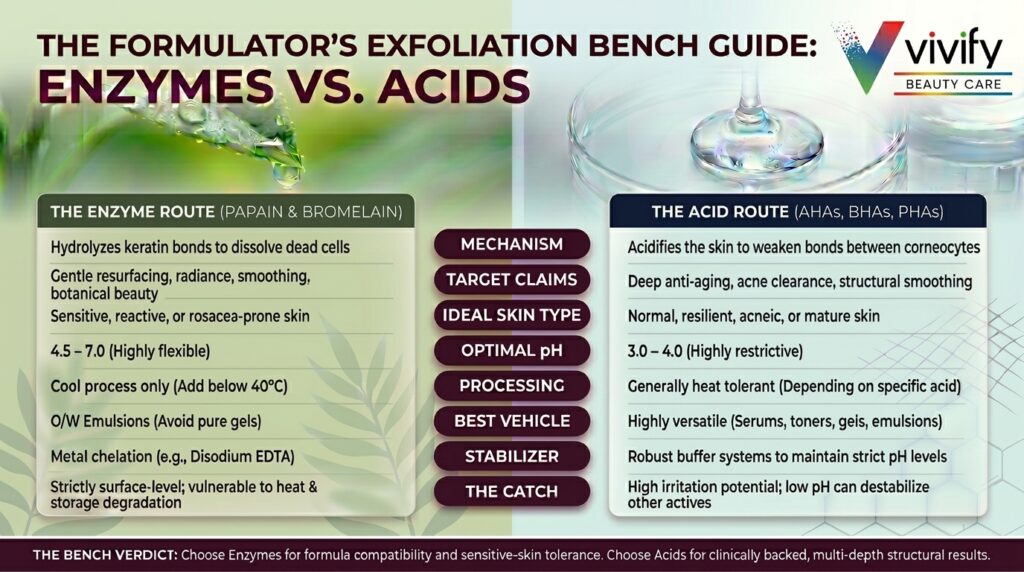
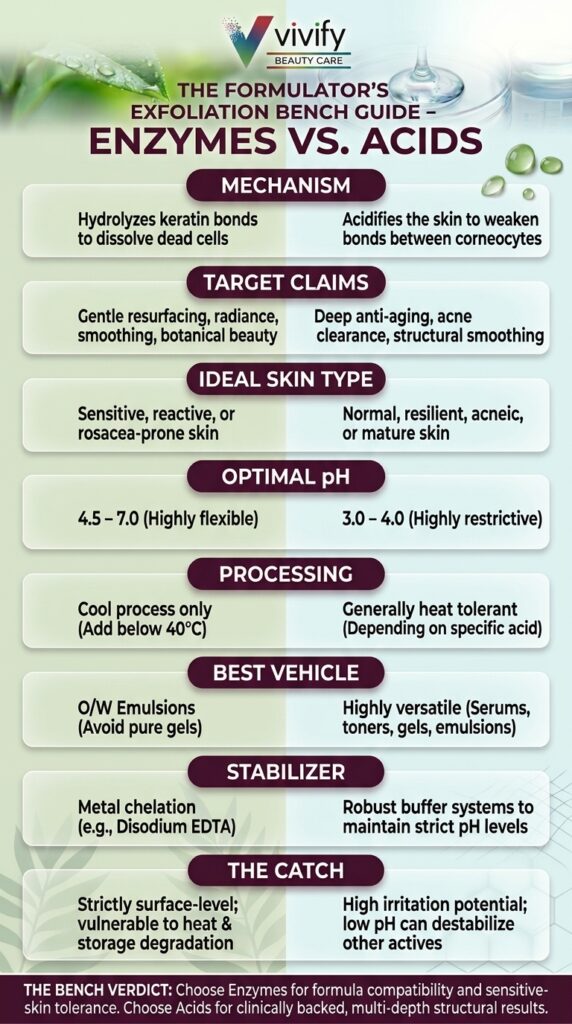
- Enzymatic exfoliation works via proteolytic cleavage of keratin bonds in the stratum corneum — a surface-level, largely pH-flexible mechanism that doesn’t require the low-pH environment acid exfoliants demand.
- Papain’s optimal activity range is pH 6.0–7.0 (with broader activity from pH 3.0–10.0); bromelain performs best at pH 4.5–5.5, with activity declining sharply above pH 6.0.1
- The published clinical evidence base for enzyme exfoliants is substantially smaller than for AHAs/BHAs — a comprehensive literature search through 2021 identified only 11 clinical studies on enzymatic exfoliation in skincare.2
- Enzyme-based formulations require cool-process manufacturing (incorporation below 40°C), careful vehicle selection (O/W emulsions outperform gels for stability), and metal chelation with Disodium EDTA at 0.1–0.2%.1
- The FDA has taken enforcement action against unapproved topical drug products containing papain due to documented allergenic reactions — formulators must clearly distinguish cosmetic positioning from drug claims before proceeding with papain-containing products.4
- Acids — particularly AHAs — are the stronger tool when the goal is deeper exfoliation, anti-aging claims, or treatment of acne and congestion, backed by a substantially larger body of peer-reviewed clinical evidence.
How Enzymatic Exfoliation Works at the Bench
Proteolytic enzymes like papain and bromelain exfoliate the skin by hydrolyzing keratin peptide bonds in the stratum corneum, selectively breaking down dead corneocytes without requiring chemical acidification of the vehicle. Both are cysteine proteases — they use a catalytic cysteine residue to cleave the peptide backbone — and both act primarily at the skin surface rather than penetrating into deeper epidermal layers.1
This surface mechanism is formulation-relevant in a specific way: unlike AHAs, which need a low-pH environment (typically pH 3–4) to deliver efficacy, proteolytic enzymes can remain active across a much broader pH range. Papain shows activity from pH 3.0 to 10.0, with peak performance near pH 6.0–7.0 — comfortably within the range of a skin-compatible, non-irritating vehicle.1 That flexibility opens formulation options that acid exfoliants simply can’t access.
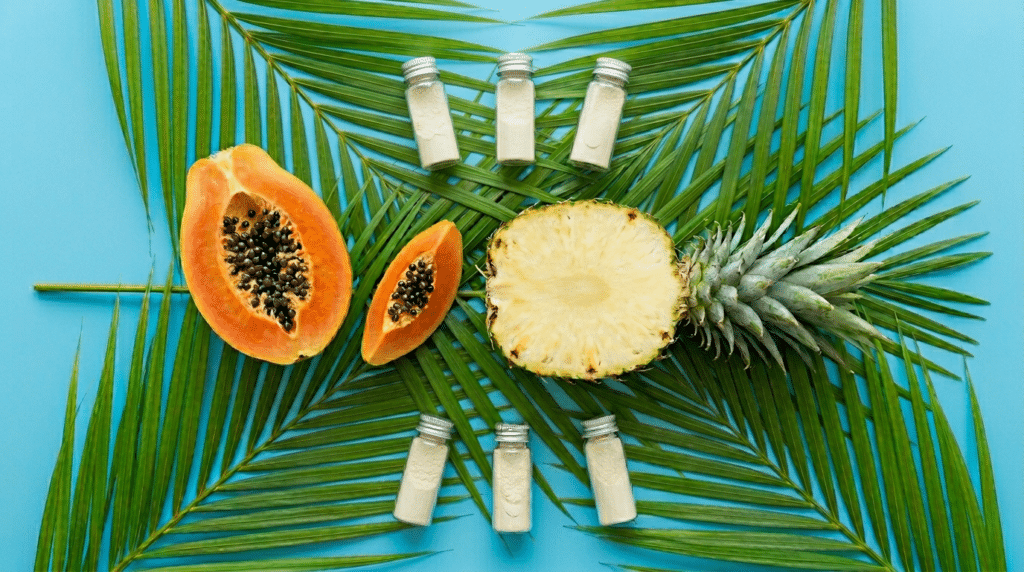
Both papain and bromelain are botanical-derived. Papain is extracted from the latex of Carica papaya; bromelain comes primarily from the stem and fruit of Ananas comosus (pineapple). Vivify carries both within its botanical extracts and phytoactives portfolio, making them accessible as formulation-ready actives backed by hands-on technical support.
How Acid Exfoliation Works — and What It Costs the Formula
Alpha-hydroxy acids (AHAs), beta-hydroxy acids (BHAs), and polyhydroxy acids (PHAs) exfoliate through pH-dependent desquamation: they weaken the cohesion between corneocytes and the intercellular matrix by acidifying the skin surface environment. AHAs can also influence dermal processes at higher concentrations and extended use, which underpins their role in anti-aging formulations.
The formulation cost of this mechanism is real. To achieve efficacy from glycolic acid, the vehicle typically needs to sit at pH 3–4 — acidic enough to irritate compromised or sensitive skin and restrictive enough to create compatibility conflicts with certain emulsifiers, preservatives, and pH-sensitive actives. Salicylic acid (a BHA) penetrates follicles and delivers acne-relevant benefits, but it operates within its own defined pH window. Vivify’s AHA, BHA, and PHA acid actives cover this category with options ranging from glycolic and lactic to the gentler PHAs.
AHAs carry a substantially larger clinical evidence base than enzymatic exfoliants — decades of published in vitro, in vivo, and clinical data. When the formulation strategy requires that evidentiary weight — for defensible anti-aging, brightening, or acne claims — acids generally offer more documentation to draw from.
Papain vs. Bromelain: Key Differences for Formulators
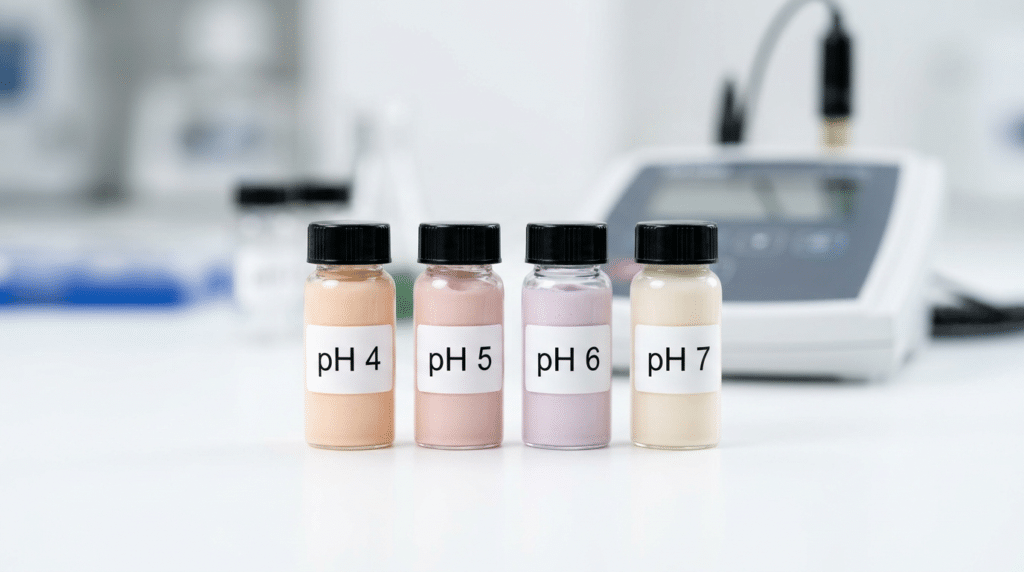
Papain and bromelain share a mechanism and a category, but they are not interchangeable at the bench. The table below summarizes the key formulation-relevant differences:
| Property | Papain | Bromelain |
| Optimal pH | pH 6.0–7.0 (active range pH 3.0–10.0)1 | pH 4.5–5.5 (activity declines sharply above pH 6.0)1 |
| Temperature sensitivity | Moderate; activity decreases with temperature increase; incorporate below 40°C | High; avoid processing above 40°C; stable at 4°C; extended stability at −20°C1 |
| Substrate specificity | Narrower; strong preference for lysine–arginine cleavage sites | Broader; hydrolyzes aromatic and hydrophobic amino acids; gentler, more controlled action |
| Vehicle stability | Emulsions preferred; gels least stable; activity decreases with temperature | Emulsions preferred over gels; color change observed in all samples after 180 days at varying conditions3 |
| Regulatory flag | FDA has taken enforcement action against unapproved topical papain drug products due to documented allergenic reactions4 | No equivalent FDA restriction; allergenicity documented in literature but less prominent |
Bromelain is generally more versatile for leave-on and semi-rinse product formats due to its broader substrate tolerance and slightly more predictable formulation behavior. Papain’s stronger proteolytic activity makes it effective in short-contact formats (masks, professional peels), but its regulatory history and allergenicity profile require careful evaluation before proceeding with cosmetic development.
When Enzymatic Exfoliation Is the Right Formulation Choice
Enzymatic exfoliation is technically preferable over acid-based alternatives when one or more of the following product or formulation conditions apply.
- Sensitive skin positioning. Products targeting reactive, rosacea-prone, or compromised skin need effective exfoliation without the low-pH environment acids require. Enzyme exfoliants deliver surface-level renewal at a skin-compatible pH, with no need for the acidic buffer systems that make AHA formulations uncomfortable on sensitized skin.
- Botanical-ingredient-led formulation. Papain and bromelain integrate naturally alongside other botanical actives when the product concept centers on plant-derived ingredients. Their botanical origin also supports clean and natural positioning where the brand framework calls for it.
- pH-incompatible formulation architecture. Some formulations incorporate pH-sensitive peptides, certain preservatives, or botanicals that degrade at low pH. These systems are functionally incompatible with acid-based exfoliants. Enzyme exfoliants can operate across a wider pH range without disrupting those components.
- Texture, radiance, and active-penetration goals. For face care formulations where the primary claims are smoother texture, improved radiance, or enhanced uptake of subsequent actives, enzymatic exfoliation is often sufficient without introducing the pH constraints or irritation risk that acids bring.
Rinse-off and short-contact formats — masks, exfoliating cleansers, enzyme treatment masks — are generally better suited to enzymatic actives than leave-on products, given the inherent stability challenges enzymes face in ambient storage conditions.
When Acids Are Still the Better Formulation Tool
Enzymatic exfoliation has real limitations. There are formulation contexts where acids clearly outperform enzymes, and formulators should know which they are.
- Anti-aging and photoaging claims. Glycolic acid at sufficient concentrations acts beyond the stratum corneum, with evidence supporting influence on dermal collagen synthesis and epidermal thickness. Enzymatic exfoliants do not carry this depth of evidence or penetration profile.
- Acne, congestion, and follicular clearance. Salicylic acid’s lipophilicity allows it to penetrate sebaceous follicles, making it the standard active for blackhead- and comedone-targeted products. No enzymatic equivalent currently offers this follicular mechanism.
- Evidence-weight requirements. When product claims require a large body of peer-reviewed clinical support — as demanded by retailers, regulatory reviewers, or brand legal teams — AHAs and BHAs deliver that evidentiary depth. A systematic search through 2021 found only 11 clinical studies on enzymatic exfoliation in skincare2 compared to decades of AHA/BHA data.
- Concentration-dependent depth. At higher concentrations and lower pH, AHAs continue to show escalating efficacy across multiple skin layers. Enzyme exfoliants reach a performance ceiling faster and are harder to push beyond surface-level action without stability or safety tradeoffs.
Formulation Considerations for Enzyme Stability
Enzyme exfoliants work only if they survive the formulation. Stability is the central practical challenge for enzyme-based products, and it begins long before the packaging stage. These five factors require active management:
- Processing temperature. Both papain and bromelain are heat-sensitive. Formulating above 40°C risks significant enzymatic degradation during manufacturing.1 Cool-process formulation is required: build the vehicle first, cool to below 40°C, and incorporate the enzyme last.
- Vehicle selection. O/W emulsions consistently outperform gel bases for enzyme stability. A six-month stability study of bromelain at 0.5%, 1.0%, and 2.0% in O/W emulsion and gel found that all samples showed color change after 180 days, with gels demonstrating greater degradation and activity loss.3 O/W emulsions stored at 4–5°C are the most stable vehicle type for bromelain-containing products.
- pH buffering. Bromelain should be formulated at pH 5.0–5.5 to remain within its activity window while maintaining physical stability.1 Papain tolerates a wider range but performs best near pH 6.0–7.0. Both enzymes require thoughtful pH design — not just for activity, but to prevent premature self-digestion.
- Metal ion chelation. Disodium EDTA at 0.1–0.2% is recommended to prevent metal-ion-catalyzed oxidation, which accelerates enzyme breakdown and contributes to the color change seen in stability studies.1
- Encapsulation and packaging. For leave-on applications requiring ambient-temperature stability, encapsulation strategies — including nanoemulsions and polymer-based delivery systems — are being actively explored to protect enzymatic activity over longer shelf-life periods.4 Airless pump dispensers and opaque packaging further reduce oxidation risk from air and light exposure.
Frequently Asked Questions About Enzymatic Exfoliation vs. Chemical Exfoliation
What is the difference between enzymatic and chemical exfoliation at the molecular level?
Enzymatic exfoliants use proteolytic enzymes (such as papain or bromelain) to cleave keratin peptide bonds directly in dead skin cells at the surface of the stratum corneum. Chemical exfoliants — AHAs, BHAs, and PHAs — work through pH-dependent desquamation, weakening the bonds between corneocytes by acidifying the skin environment. The most practical distinction for formulators is this: enzymatic exfoliation is largely pH-independent; chemical exfoliation requires a low-pH vehicle to function, which constrains the rest of the formula accordingly.
Is bromelain or papain the better choice for a stable cosmetic formulation?
Bromelain is generally more practical for modern cosmetic development. It has broader substrate specificity, more predictable formulation behavior within a defined pH range (4.5–5.5), and less regulatory complexity than papain. Papain has stronger inherent proteolytic activity — an advantage in short-contact formats — but its documented allergenicity and the FDA’s enforcement history regarding unapproved topical papain drug products require careful navigation in product development.
Can enzyme exfoliants and AHAs be combined in the same formula?
They can coexist in a formulation, but the combination requires close attention to pH. Bromelain loses activity sharply above pH 6.0, while AHA efficacy typically requires pH below 4.0 — operating windows that do not overlap. At low pH, enzymatic activity is suppressed, meaning one mechanism tends to dominate in practice. Sequential product use (an enzyme mask followed by an acid toner, for example) is more reliable than a single-formula combination for delivering both mechanisms effectively.
Does the FDA’s papain restriction apply to cosmetic exfoliants?
The FDA’s enforcement action specifically targeted unapproved topical drug products making therapeutic claims (wound debridement, necrotic tissue removal). For cosmetic formulations making purely cosmetic claims — exfoliation, smoothing texture, improving radiance — the drug restriction does not automatically apply. However, if a papain-containing product is formulated or labeled in a way that implies treatment of a specific condition, it may enter drug territory under FDA jurisdiction.For surface texture improvement and radiance enhancement, evidence suggests enzymatic exfoliation can be comparably effective. For deeper anti-aging effects — collagen stimulation, epidermal thickening, significant photoaging correction — glycolic acid at clinical concentrations has a substantially larger and more robust evidence base. The right choice depends on the product’s specific claims, target consumer, and formulation architecture, not on a general ranking of exfoliant categories.
Formulators should consult regulatory counsel before making any drug-adjacent claims with papain-containing products.
Are enzyme exfoliants as effective as glycolic acid?
For surface texture improvement and radiance enhancement, evidence suggests enzymatic exfoliation can be comparably effective. For deeper anti-aging effects — collagen stimulation, epidermal thickening, significant photoaging correction — glycolic acid at clinical concentrations has a substantially larger and more robust evidence base. The right choice depends on the product’s specific claims, target consumer, and formulation architecture, not on a general ranking of exfoliant categories.
Ready to Source Enzymatic or Acid Exfoliants for Your Next Formula?
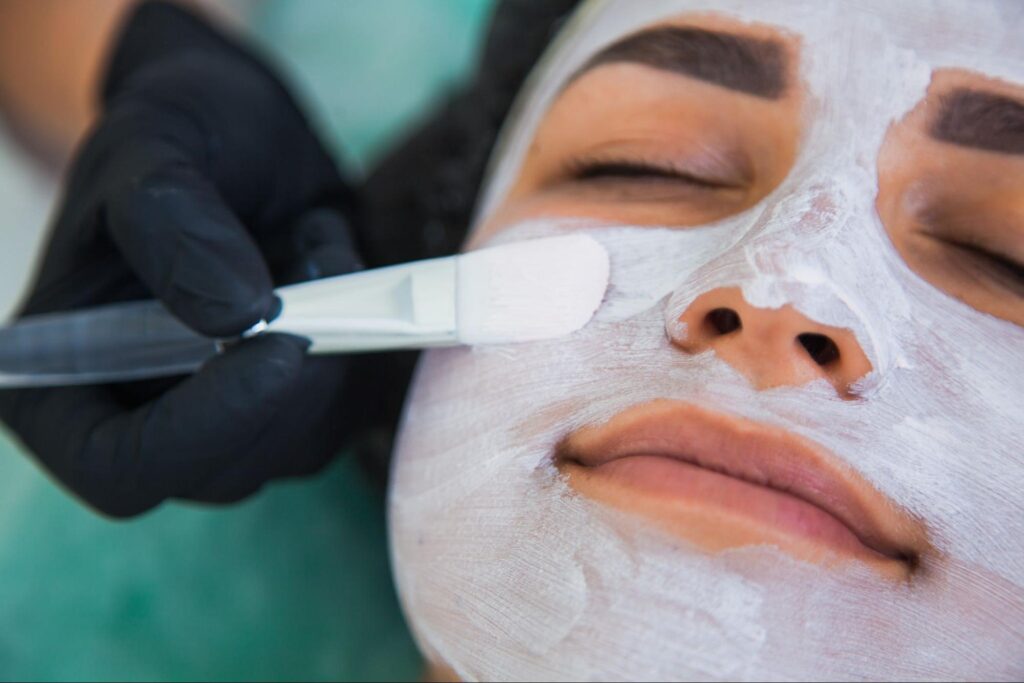
Exfoliant selection is a formulation-design decision, not just an ingredient swap. Whether you’re developing a sensitive-skin enzyme mask, a high-performance AHA treatment, or exploring encapsulated enzyme delivery for a stable leave-on product, the right active — and the formulation strategy around it — depends on a combination of product goals, vehicle design, and claims architecture.
Vivify’s actives portfolio includes botanical extracts and phytoactives, enzyme-based actives, and AHA/BHA/PHA acids — with the technical depth to support selection, compatibility screening, and early-stage formulation work. Our formulation and technical support services include ingredient selection guidance, prototype development, and stability evaluation. Contact Vivify to connect with a formulation specialist.
References
1. Venetikidou, M., Lykartsi, E., Adamantidi, T., Prokopiou, V., Ofrydopoulou, A., Letsiou, S., & Tsoupras, A. (2025). Proteolytic enzyme activities of bromelain, ficin, and papain from fruit by-products and potential applications in sustainable and functional cosmetics for skincare. Applied Sciences, 15(5), 2637. https://doi.org/10.3390/app15052637
2. Trevisol, T. C., Henriques, R. O., Souza, A. J. A., & Furigo, A., Jr. (2022). An overview of the use of proteolytic enzymes as exfoliating agents. Journal of Cosmetic Dermatology, 21(8), 3300–3307. https://doi.org/10.1111/jocd.14673
3. Lourenço, C. B., Ataide, J. A., Cefali, L. C., Novaes, L. C. D. L., Moriel, P., Silveira, E., Tambourgi, E. B., & Mazzola, P. G. (2016). Evaluation of the enzymatic activity and stability of commercial bromelain incorporated in topical formulations. International Journal of Cosmetic Science, 38(5), 535–540. https://doi.org/10.1111/ics.12308
4. Lima, C. S. A., Varca, J. P. R. O., Nogueira, K. M., Fazolin, G. N., Freitas, L. F., Souza, E. W., Lugão, A. B., & Varca, G. H. C. (2020). Semi-solid pharmaceutical formulations for the delivery of papain nanoparticles. Pharmaceutics, 12(12), 1170. https://doi.org/10.3390/pharmaceutics12121170